Aesthetic Vertical Storage: 7 No-Drill Systems That Make Rental Apartments Look Custom-Built
Discover 7 heavy-duty, no-drill vertical storage systems that reduce visual noise and make tiny rental apartments look custom-built without damage.
Article Information & Navigation
Moving into a rental apartment often starts with a compromise. You need a place to put your belongings, but you cannot alter the walls to build the storage you actually want.
For many, the immediate solution is stacking cheap, temporary bins. While this approach solves the physical problem of having too many things, it often creates a new, less obvious issue: a room that never quite feels settled.
Why Cheap Storage Bins Destroy Your Apartment’s Calm
When a small apartment feels exhausting, the culprit is not always the amount of stuff in it. Often, it is how that stuff is contained.
Clear plastic storage bins are a common go-to for renters. They are affordable and easily accessible. However, they also generate a significant amount of visual noise. The high-gloss finish reflects light unevenly, and the transparency—while meant to be helpful—constantly displays the mismatched shapes and colors of the items inside.
Instead of seeing a single, calm surface, the eye is forced to register dozens of individual objects.
According to foundational spatial design and organization insights highlighted by Apartment Therapy, eliminating visual clutter—whether on open counters or inside temporary storage—has a profound impact on how a space feels, defining the crucial difference between a room that is merely functional and one that is truly calming. When exposed to constant micro-clutter, the brain never fully stops processing the contents of the room, even when everything is technically put away.
This observation is echoed frequently in everyday experiences. Across small-space living communities like Reddit’s r/smallspaces, residents point out a shared frustration: relying heavily on stacked plastic bins eventually makes an apartment feel more like a temporary storage unit than a comfortable home. The physical clutter is contained, but the mental overwhelm remains.
If stacked plastic bins are creating visual noise in your layout, you may be falling into other subtle storage traps without realizing it. Visual Clutter Traps: 7 Storage Mistakes Making Your Tiny Apartment Feel Cramped Discover how swapping clear acrylic containers and rebalancing open shelves instantly restores calm to a small footprint.
The “Custom-Built” Illusion Without Losing Your Deposit
The ideal scenario for most small-space layouts is architectural permanence—storage that looks like it was built specifically for the room. Custom millwork and floor-to-ceiling shelving naturally blend into the background, creating a seamless, calming environment.
The challenge, of course, is the lease agreement.
Most rental contracts strictly prohibit the kind of hardware required for traditional heavy-duty shelving. Standard drywall anchors over 1/4 inch, large screws, and even cheap wall adhesives that strip paint can quickly lead to expensive security deposit deductions when it is time to move out.
Because of this, the modern approach to compact living has evolved. The goal is no longer just finding the cheapest temporary box; instead, the design focus has shifted toward discovering how to make rental apartments look expensive without drilling into the drywall.
This architectural challenge is exactly where aesthetic vertical storage becomes highly practical. By relying on advanced engineering principles—specifically tension, compression, and weight distribution—it is now possible to implement heavy-duty, renter-friendly storage upgrades that reach from the floor to the ceiling seamlessly.
These systems provide the illusion of built-in cabinetry and custom shelving, bridging the gap between temporary rental constraints and the desire for a deeply calming, permanent-feeling home.
7 Heavy-Duty No-Drill Systems for Seamless Vertical Storage
When reviewing storage solutions that align with a calming aesthetic, the focus quickly shifts away from flimsy plastics and toward robust structural systems. As frequently highlighted in renter-friendly design roundups by Good Housekeeping, utilizing lightweight, floor-to-ceiling shelving is one of the most effective strategies to create the upscale illusion of custom, built-in cabinetry in a rental. While traditional setups often require mounting hardware, modern no-drill storage systems take this vertical concept a step further—achieving that same custom look using tension and friction rather than power tools. To elevate these systems within a Warm Minimalist or Japandi environment, the most successful setups implement matte powder-coated steel, ash wood details, and muted neutral tones that provide structural integrity while maintaining a quiet visual flow.
Here is a look at seven systems that rely on engineering rather than hardware to achieve a custom-built appearance.
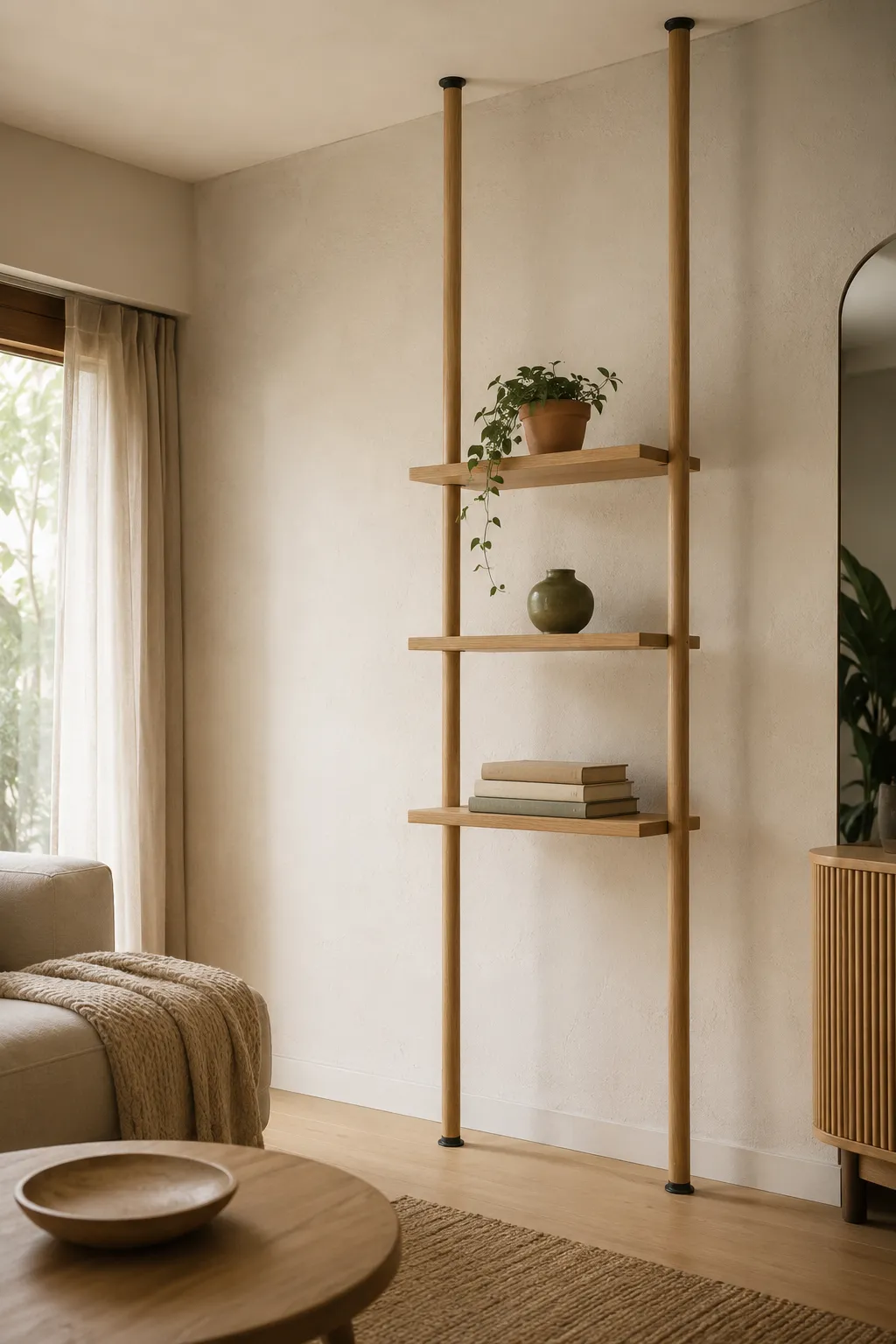
1. Floor-to-Ceiling Tension Pole Shelving (The Japandi Room Divider)
For renters aiming to maximize height, heavy-duty tension pole shelves for apartments provide a highly stable foundation without touching a drill.
Instead of resting entirely on the floor, these setups use spring-loaded internal mechanisms inside the vertical poles. When extended, they press firmly against both the floor and the ceiling, locked in place by high-friction silicone pads that prevent slipping and protect paint.
Drawing inspiration from minimalist brands like Yamazaki Home or classic String Furniture layouts, these systems are surprisingly robust. Everyday users report that standard configurations can comfortably hold roughly 10 to 15 pounds per shelf. Beyond storage, they serve a secondary architectural purpose: when placed in the middle of a studio apartment, the open structure acts as a gentle room divider, separating a sleeping area from a living space while still allowing natural light to pass through.
If you are using open tension pole shelving as a subtle room divider, integrating it with broader layout strategies will further maximize your space. How to Divide a Studio Apartment Without Walls: 7 Layouts for a Calm & Cozy Space Explore 7 renter-friendly layouts using floating furniture, light layering, and soft curtains to define functional zones without blocking natural light.
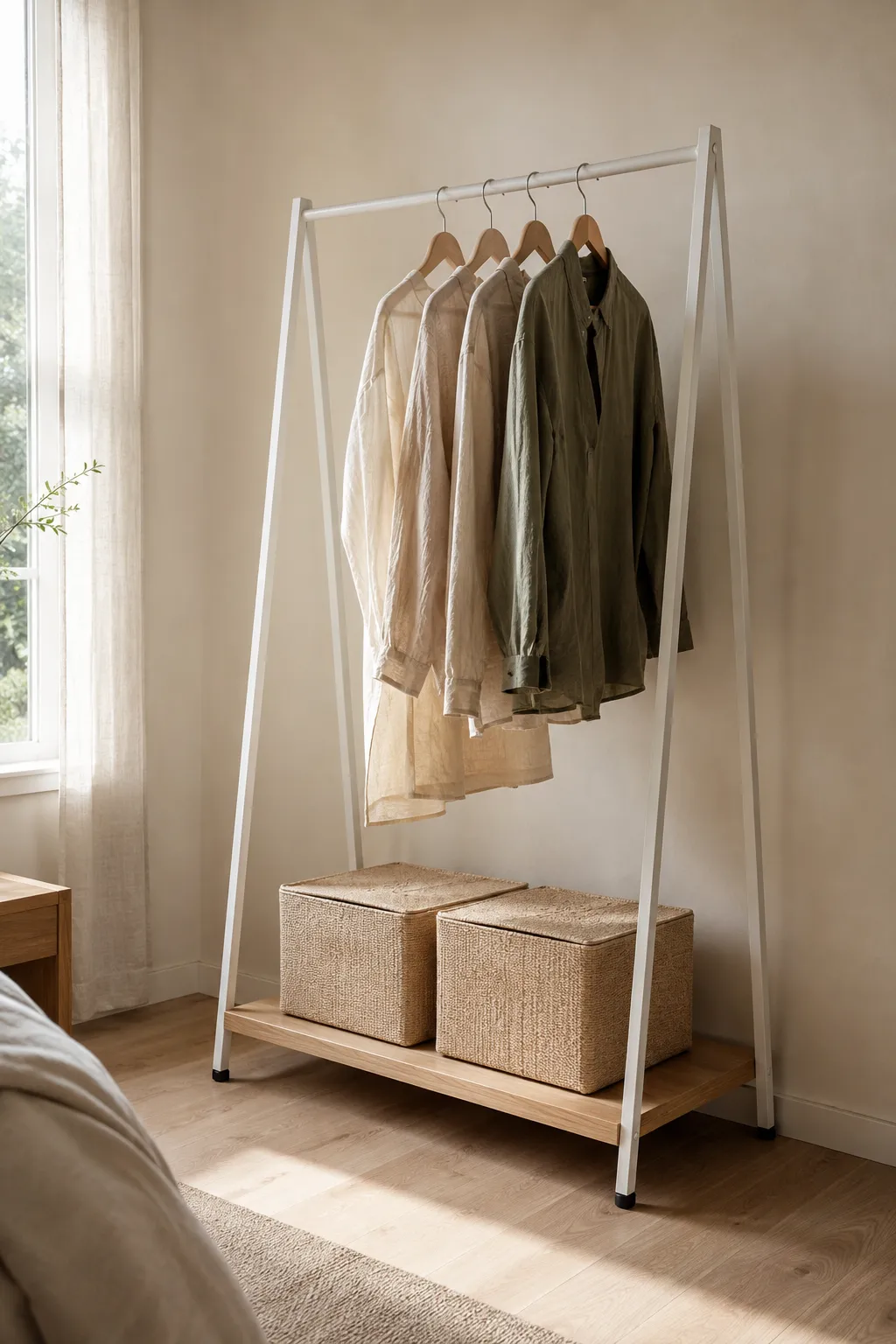
2. Freestanding Modular Wardrobe Frames (Zero-Wall Contact)
Another recurring approach in compact living spaces is the freestanding modular wardrobe. These units bypass the walls entirely by distributing their weight through a wider, specifically engineered base.
While many tension rod shelving units require at least some ceiling contact, zero-wall-contact frames rely purely on gravity and geometry. Designs often feature an A-frame structure or a leaning silhouette stabilized by heavy-duty anti-slip rubber feet.
In practical terms, these are often utilized as metal garment racks integrating solid wooden shelving at the base. The wood grounds the piece visually, while the matte metal frame offers substantial hanging space for daily wardrobes or heavy winter coats, keeping the room organized and visually quiet.
3. Heavy-Duty Adhesive Floating Ledges (Gallery Wall Storage)
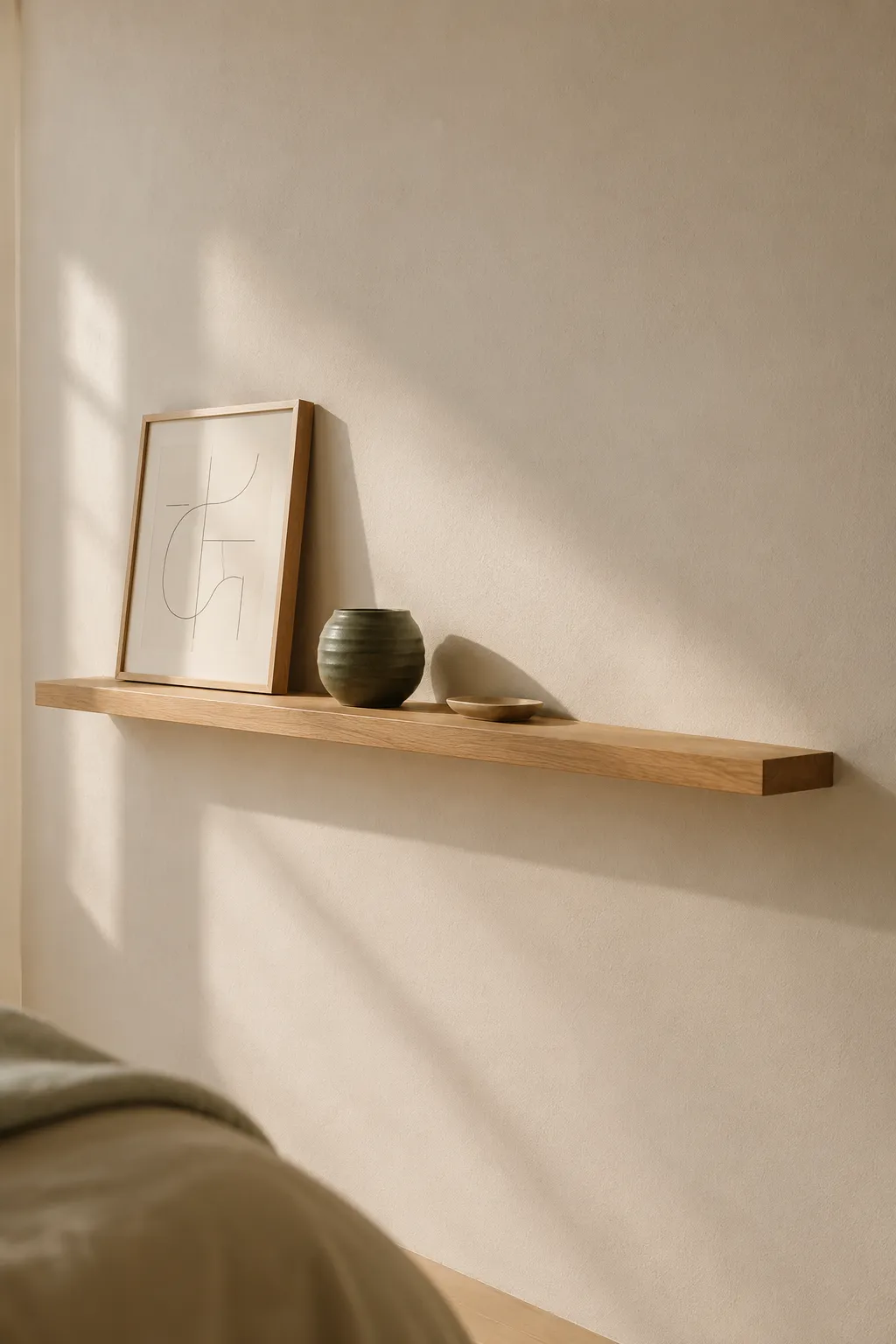
When traditional shelving is not an option, adhesive floating ledges offer a way to display curated items vertically. Modern iterations utilize broad-surface adhesive strips, such as heavy-duty PE foam tape or advanced Command technology, designed specifically to grip smooth, painted drywall.
These ledges generally cap out at holding 5 to 10 pounds. They are best utilized for displaying a few select items rather than supporting heavy book collections.
The key to longevity with this system—and ensuring a completely damage-free removal when your lease ends—is proper surface preparation. As emphasized in the care and removal guidelines by The Spruce, achieving optimal product performance and clean removal requires strict adherence to initial application basics. Specifically, clearing the wall of grease and grime with isopropyl alcohol is the defining factor between an adhesive ledge that stays safely mounted for years and one that fails prematurely or damages paint upon removal.
4. Concealed Over-the-Door Pantries with Wood Cladding
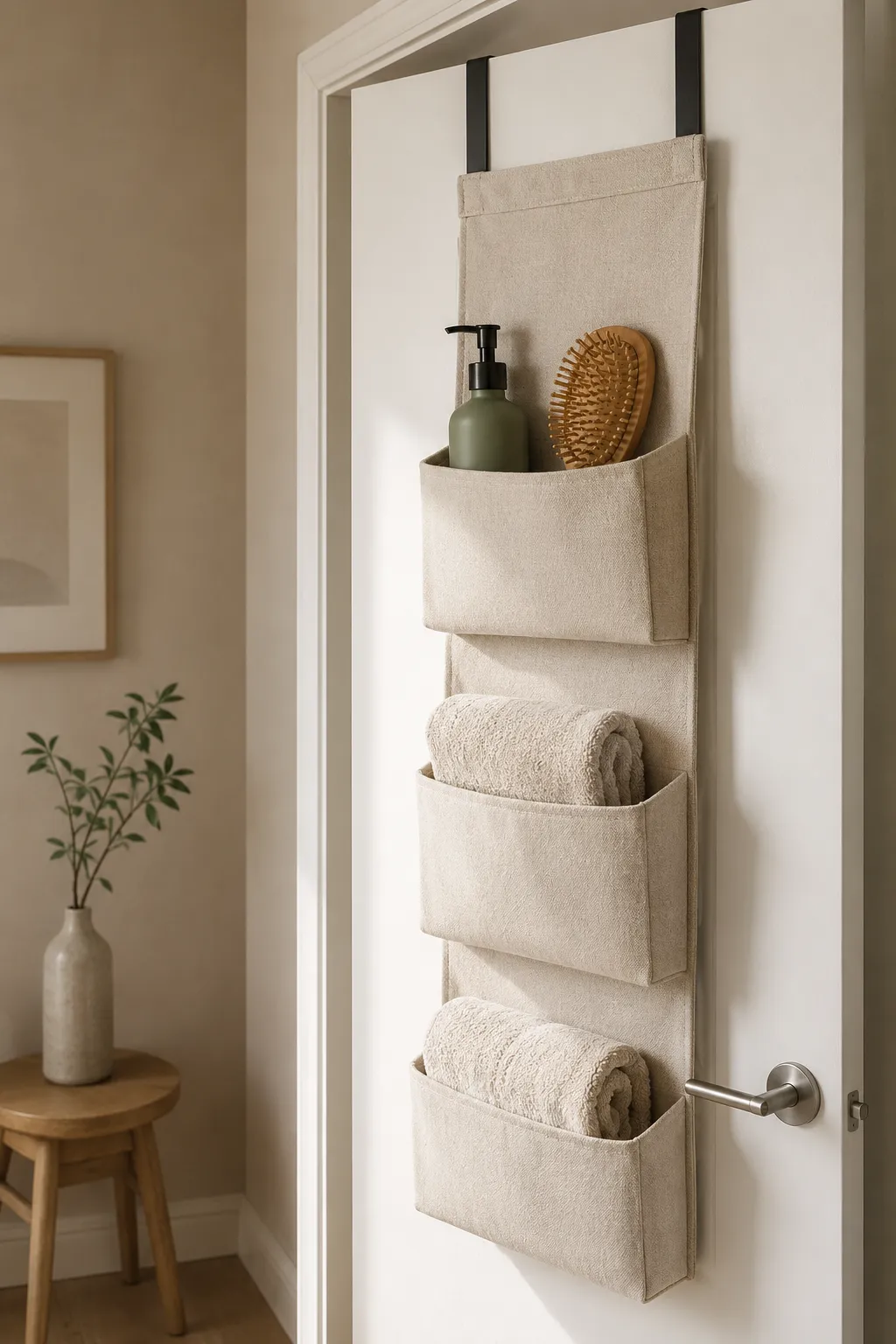
Over-the-door storage is a familiar concept, but standard wire racks often contribute heavily to visual clutter, especially in kitchens and bathrooms. The items are stored, but they remain entirely visible, creating a wall of contrasting colors and shapes.
The aesthetic upgrade to this system involves concealed backings. Modern variations feature solid panels—often bamboo, light wood veneers, or matte-painted finishes—that hide the structural brackets. When the door is closed or the unit is viewed from an angle, it mimics the appearance of a built-in, shallow cabinet rather than a temporary hanging rack.
By keeping small, highly detailed items out of primary sightlines, this setup significantly reduces visual noise, helping a busy kitchen or compact bathroom maintain a sense of calm.
5. Expanding Tension Closet Systems (The Width-Adjustable Lifesaver)
Rental apartment closets are notoriously inefficient, often providing nothing more than a single hanging rod. When drilling to add custom shelves is out of the question, expanding tension closet systems offer a structural workaround.
These systems utilize a grid of poles that expand both horizontally and vertically, locking against the existing walls, floor, and ceiling of the closet. This horizontal and vertical tension allows the system to multiply hanging space without a single screw.
What makes these systems highly practical for long-term renters is their durability. When properly tightened and installed on level surfaces, commercial-grade versions can hold up to 100 pounds of clothing. By containing heavy garments securely within a hidden space, the rest of the bedroom is freed from the visual weight of exposed clothing racks.
6. Leaning Ladder Desks with Tiered Overhead Shelving
In tiny apartments, furniture often needs to serve multiple functions while maintaining a light footprint. Leaning ladder desks introduce vertical storage and workspace simultaneously by leveraging a simple engineering principle: gravity.
These units sit at a precise angle, using the 90-degree intersection of the wall and the floor to lock the frame in place. The physics of the design mean that the heavier the items placed on the bottom shelves or desk surface, the more stable the entire unit becomes.
From a visual standpoint, the minimalist, open-air design prevents the room from feeling “boxed in.” Because the sides of the ladder are open, light passes through easily, making it a functional workspace that respects the visual boundaries of a small room.
7. Countertop-to-Cabinet Tension Grids (Vertical Kitchen Expansion)
Kitchens in small rentals are frequently overwhelmed by daily-use items. A concept that frequently appears in discussions about the “Tiny Apartment Reset Routine” is the importance of keeping flat surfaces clear.
Countertop-to-cabinet tension grids address this directly. These are essentially mini-tension rods that lock tightly between the kitchen counter and the bottom of the upper cabinets. They support a sleek metal grid where utensils, spices, and small plants can be hung.
The visual goal here is direct: clear the countertop. By moving everyday tools just a few inches upward onto a low-profile grid, the workspace feels instantly larger and significantly easier to wipe down and maintain.
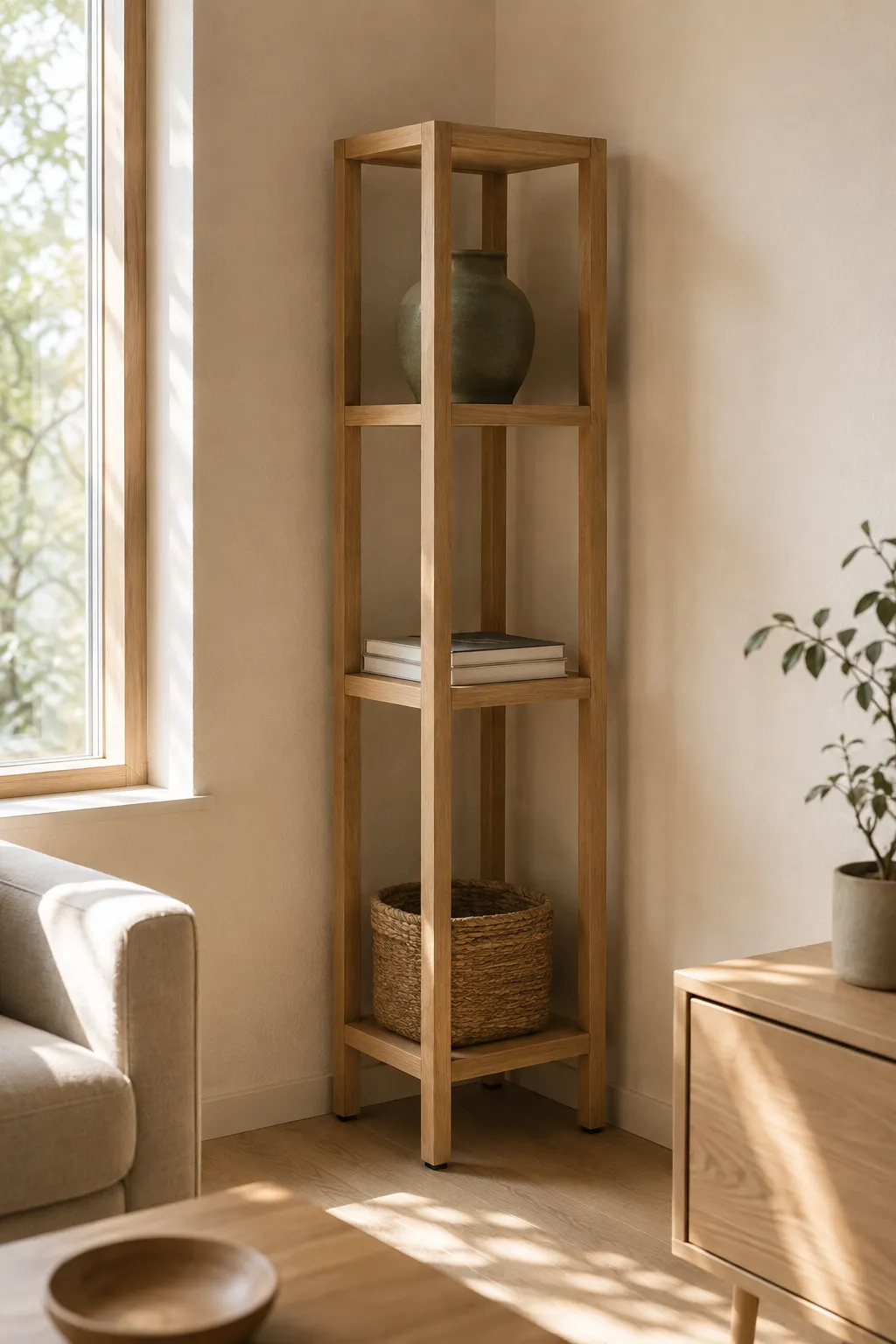
The Warm Minimalism Rulebook: Styling Open Vertical Storage
Installing no-drill systems is only the first half of the process. How those systems are filled determines whether the apartment feels organized or simply crowded.
Achieving a state of warm minimalist organization requires a deliberate approach to styling. It is about finding the balance between aesthetic practicality and everyday convenience, ensuring the storage serves the resident rather than demanding constant upkeep.
Color-Matching Systems to Walls for a Camouflage Effect
One of the foundational principles in small-space interior design is reducing visual contrast. When a storage unit strongly contrasts with the wall behind it—such as a black metal frame against a white wall—the eye is immediately drawn to the structure itself.
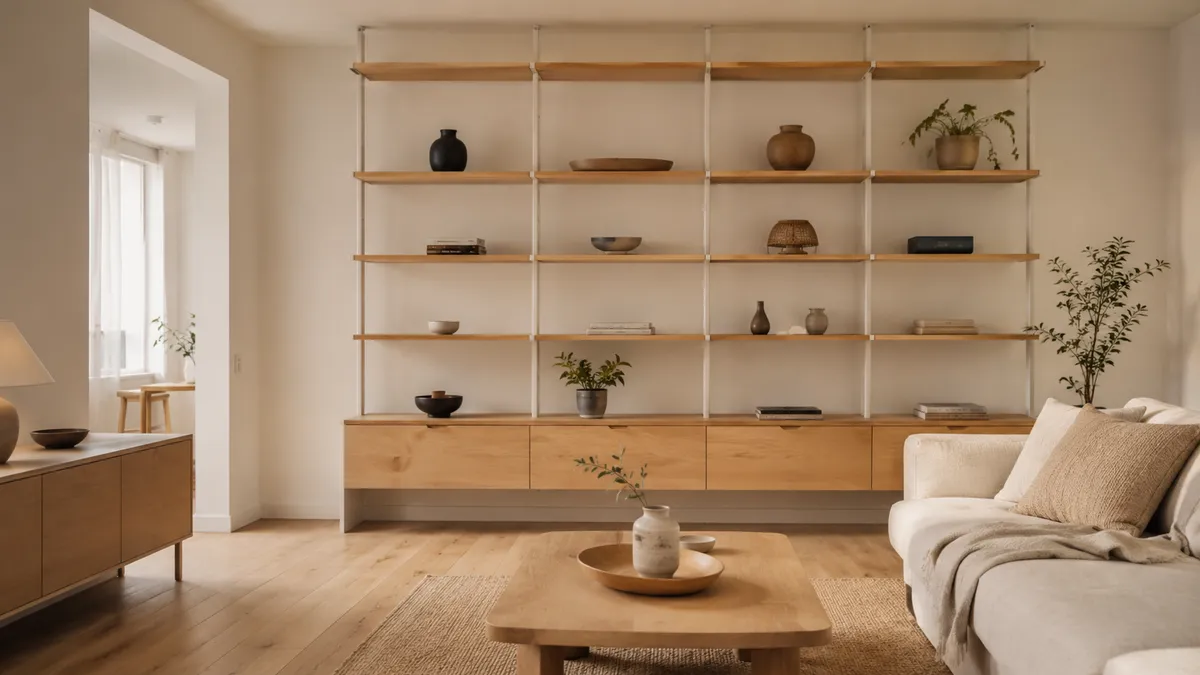
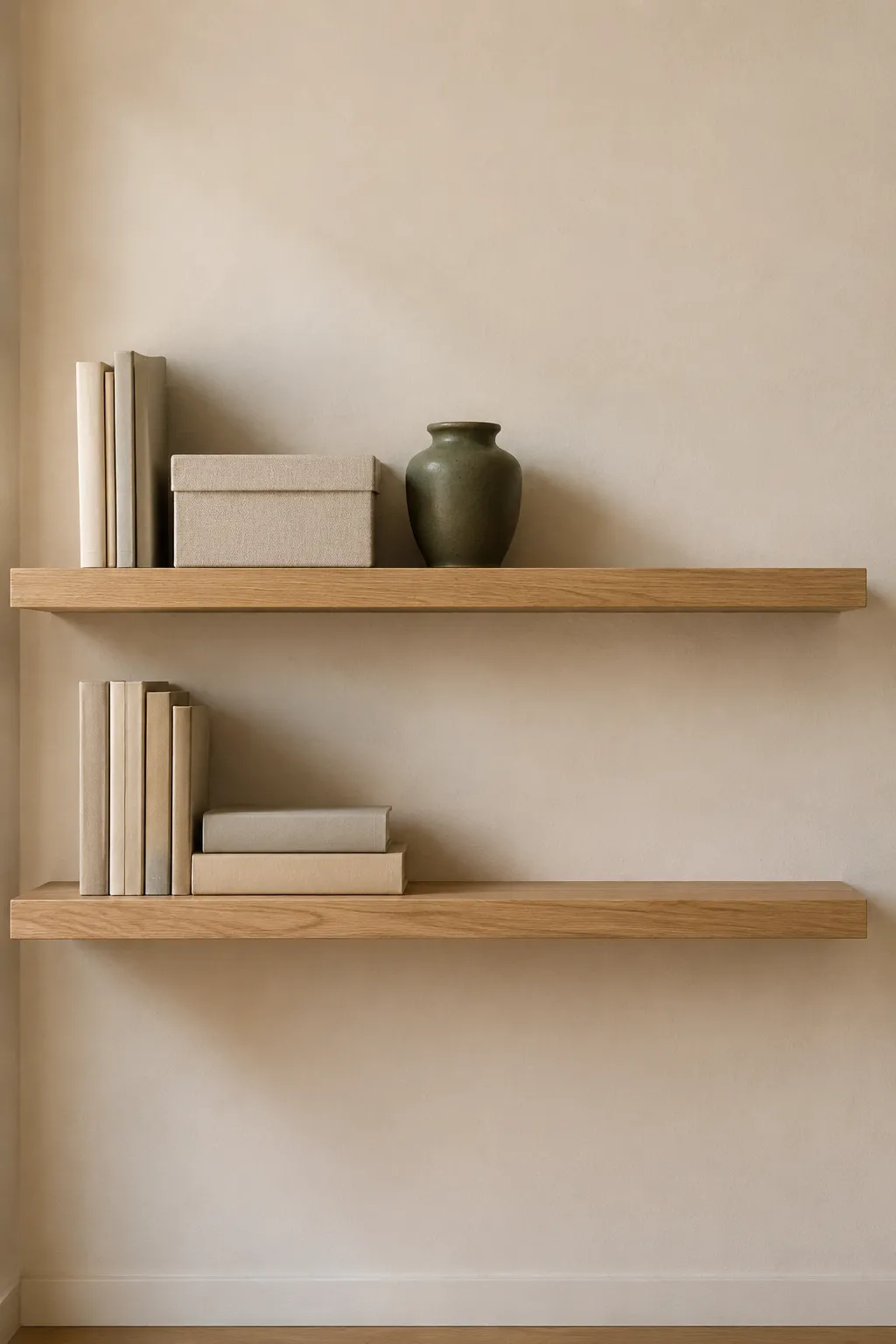
To create a camouflage effect, many design resources suggest matching the color of the shelving system to the wall paint. For example, placing warm white matte shelves against warm white walls allows the physical structure to visually recede. The eye skips over the frame and only registers the items resting on the shelves, creating a much softer and calmer visual experience.
The 70/30 Rule: Balancing Negative Space with Functional Items
When learning how to style open shelving to look calm and uncluttered, you might easily fill every available inch. However, maximum capacity usually leads to maximum visual noise.
Professional organizers and interior designers frequently advocate for a specific mathematical ratio to prevent this issue. As highlighted in the styling metrics shared by Ashdeco, the traditional “Bookshelf Rule” dictates a 70/30 ratio, where 70 percent of the space forms the visual foundation using books, while the remaining 30 percent is punctuated by curated decor objects like plants, frames, or ceramics.
The engineering secret here lies in avoiding 100 percent capacity; capping your shelf loading at this 70 percent sweet spot naturally leaves roughly 20 percent of the shelf width visually open. This intentional negative space gives the eyes the essential breathing room needed to prevent a chaotic look, allowing the apartment to breathe while keeping daily essentials fully accessible.
Weight Limits and Wall Safety: Doing “No-Drill” The Right Way
When discussing damage-free vertical organization, it is important to address the reality of physics. No-drill solutions are highly effective, but they are not magic. Understanding how they interact with your apartment’s specific architecture is the key to creating renter-safe heavy-duty storage that does not fail unexpectedly.
Before installing any system, there are a few engineering realities to consider. To understand this, having no-drill wall shelf weight limits explained through basic structural principles is essential for everyday practice:
- Tension Rods and Ceiling Types: Tension systems rely on friction. If placed against a high-gloss painted ceiling or an uneven “popcorn” texture, the grip is significantly compromised. In these situations, using a distribution plate—a flat pad that spreads the pressure over a wider area—is necessary to prevent the pole from slipping or denting the ceiling.
- The 30-Day Adhesive Rule: Modern adhesives are incredibly strong, but they require a fully stable base to bond. Never apply heavy-duty adhesives to a freshly painted wall; as detailed in the official paint cure time guidelines by Benjamin Moore, standard interior paint requires a full 30 days to completely cure and harden. Applying weight-bearing adhesives before this period attaches the strip to an uncured, soft paint film, drastically increasing the risk of peeling. Additionally, heavily textured walls reduce the adhesive’s surface contact by up to 50 percent, making them unsafe for weight-bearing ledges.
- Gravity and Weight Distribution: For freestanding or leaning ladder units, the center of gravity dictates stability. Heavy items—such as art books, dense storage boxes, or thick ceramics—must always go on the bottom shelves. This firmly anchors the unit to the floor and drastically reduces any risk of tipping.
Elevating Your Vertical Space: Next Steps for a Calmer Apartment
Implementing space-saving furniture systems is just one layer of creating a highly functional home. When considering tiny apartment layouts, the goal is never to simply pack more items into the room. Instead, it is about shifting how the room feels when you spend time in it every day.
Understanding how to maximize vertical space in a studio apartment perfectly complements the broader strategy of reducing visual load. By moving belongings upward and adopting damage-free structural systems, you free up valuable floor space and protect your primary sightlines.
This approach aligns closely with the concept of invisible storage—the practice of managing exactly what the eye has to process on a daily basis.
Once you’ve elevated your storage vertically, managing what remains in your primary sightlines is the next step to lowering visual noise. Invisible Storage: 7 Low-Visual-Noise Systems That Make Tiny Apartments Feel Instantly Calmer Discover 7 concealed systems—from camouflaged cabinetry to handleless units—that protect your room’s visual flow and reduce daily mental fatigue.
When your vertical space is utilized thoughtfully, your apartment stops feeling like a temporary rental constraint and starts feeling like a permanent, intentional, and deeply calming home.
Sources & References
- 8 Ways to Reduce Visual Clutter so Your Kitchen Looks and Functions Better — Shifrah Combiths | Apartment Therapy
- Designers Say These 16 Renter-Friendly Upgrades Are Worth It — Alyssa Gautieri | Good Housekeeping
- How to Remove Command Strips and Hooks — Mary Marlowe Leverette | The Spruce
- The Bookshelf Rule: Designer Math Behind the 70/30 Ratio — Ashdeco Design Team | Ashdeco