Invisible Storage: 7 Low-Visual-Noise Systems That Make Tiny Apartments Feel Instantly Calmer
Discover seven invisible storage systems that reduce visual noise, hide everyday clutter, and help tiny apartments feel calmer without major renovations.
Article Information & Navigation
A small apartment can feel surprisingly overwhelming even when it is relatively organized.
Many people have experienced the same frustration: surfaces are clear, closets are full, and storage bins are doing their job—yet the space still feels busy. The room may not be physically cluttered, but it can still feel visually crowded.
After reviewing ideas from interior design publications, small-space living resources, and experiences shared by everyday apartment residents, one pattern appears repeatedly: the issue is not always how much storage a home has. Often, it is how much storage remains visible.
This distinction matters because our eyes constantly process what is in view. Open shelves filled with everyday items, exposed baskets, and storage systems that display rather than conceal can contribute to a feeling of visual noise, even when everything is technically organized.
That is where the idea of invisible storage becomes useful.
Invisible storage is not about hiding everything you own or creating a perfectly minimalist home. Instead, it focuses on reducing unnecessary visual distraction while making daily life easier. The goal is not to store more things. The goal is to see fewer things competing for your attention.
In this article, we look at seven low-visual-noise storage systems that frequently appear in small-space design discussions, renter-friendly setups, and real-world apartment solutions. While no single approach works for every home, these systems may help create a calmer, lighter-feeling space without requiring a larger apartment or a complete redesign.
The Hidden Cost of Visual Noise: Why Standard Storage Is Exhausting Your Brain
When a small apartment feels crowded, the first instinct is often to look for more storage.
Another basket. Another shelf. Another organizer.
Sometimes that helps. But in many cases, the feeling of overwhelm remains even after new storage solutions are added. This ongoing friction explains why standard storage feels exhausting in small spaces—because physical clutter and visual clutter are fundamentally different challenges.
Physical Clutter vs. Visual Clutter: The Warm Minimalism Perspective
Physical clutter refers to the number of belongings occupying a space. Visual clutter refers to how many objects, shapes, colors, and details remain visible to the eye throughout the day. Grounded in visual clutter psychology, a room can contain relatively few possessions and still feel visually busy. Likewise, a room with substantial storage can feel calm if most of those belongings are concealed from view—a principle supported by professional organizers at Good Housekeeping who note that visual clutter triggers subconscious stress even in clean rooms.
This distinction appears frequently in small-space design discussions. Publications such as Apartment Therapy, Southern Living, and IKEA’s small-space living resources repeatedly highlight the role that visible objects play in shaping how a room feels. Across different approaches and design styles, one theme emerges consistently: organization alone does not always create a sense of calm. Visibility matters too.
Consider two apartments with the same number of possessions.
In the first apartment, everyday items are displayed across open shelves, exposed storage units, countertops, and furniture surfaces. In the second apartment, many of those same items are stored behind doors, inside drawers, or within furniture designed to conceal them. Both homes may be equally organized, yet they can create very different visual experiences.
The difference is not necessarily cleanliness. It is visual load.
Every object that remains visible competes for a small amount of attention. Individually, a basket, a charging cable, or a stack of notebooks may seem insignificant. Together, however, dozens of visible items can create a constant background layer of visual information that makes a room feel busier than it actually is.
This is one reason standard storage systems do not always solve the problem they are intended to solve. Many storage products increase capacity while leaving belongings fully visible. As a result, they improve organization without significantly reducing visual noise.
For people living in small apartments, studios, and compact rental spaces, visibility management can sometimes be just as important as storage itself. Rather than asking, “Where can I store more things?”, it may be more helpful to ask, “What can I remove from daily view?”
Before setting up concealed storage systems, it helps to first spot the everyday habits that create lingering visual noise. Visual Clutter Traps: 7 Storage Mistakes Making Your Apartment Feel Cramped Learn how to spot and fix the most common storage mistakes that keep small spaces feeling heavy and crowded despite your best decluttering efforts.
That question forms the foundation of the seven low visual noise systems explored below.
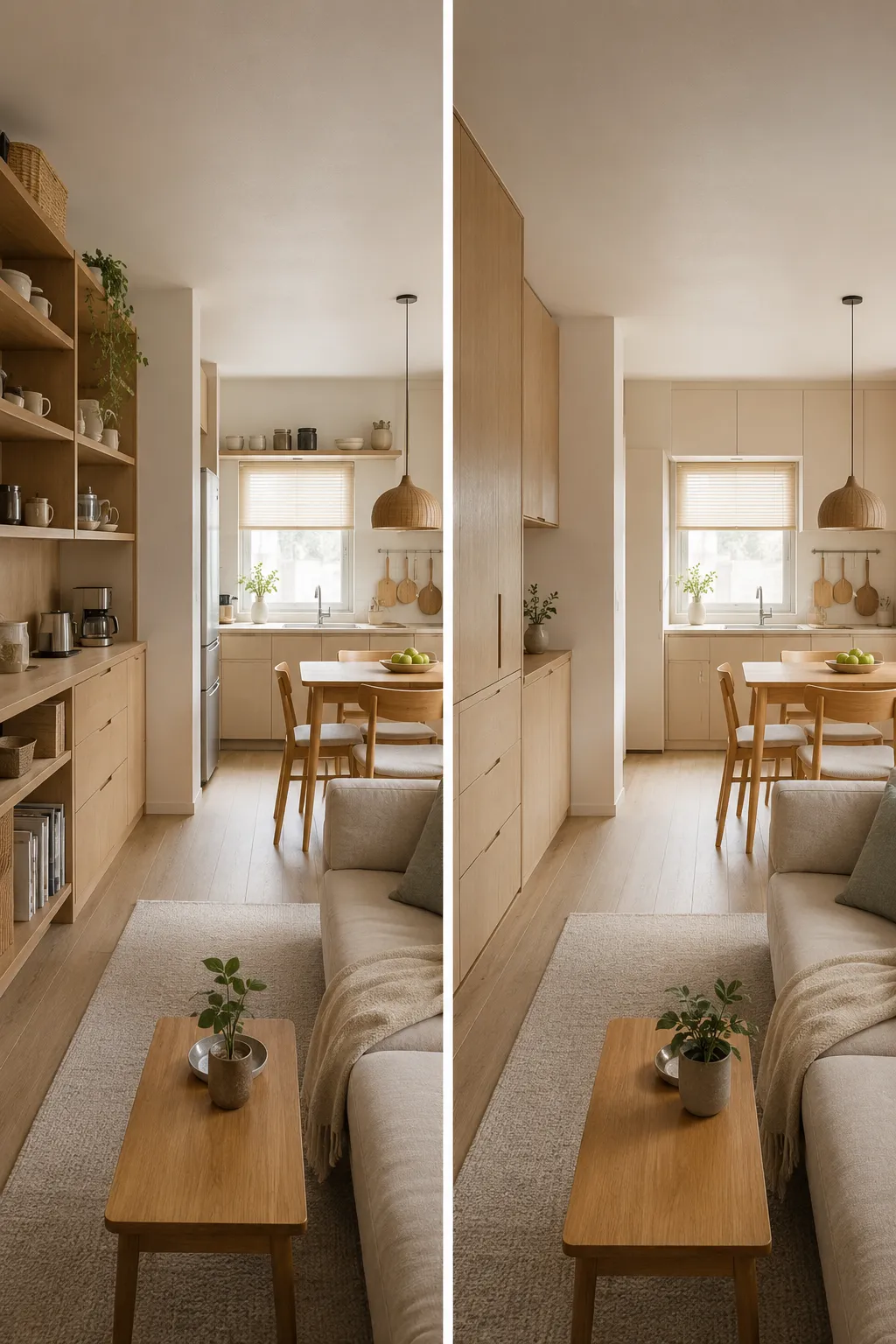
The 7 Invisible Storage Systems for Tiny Apartments
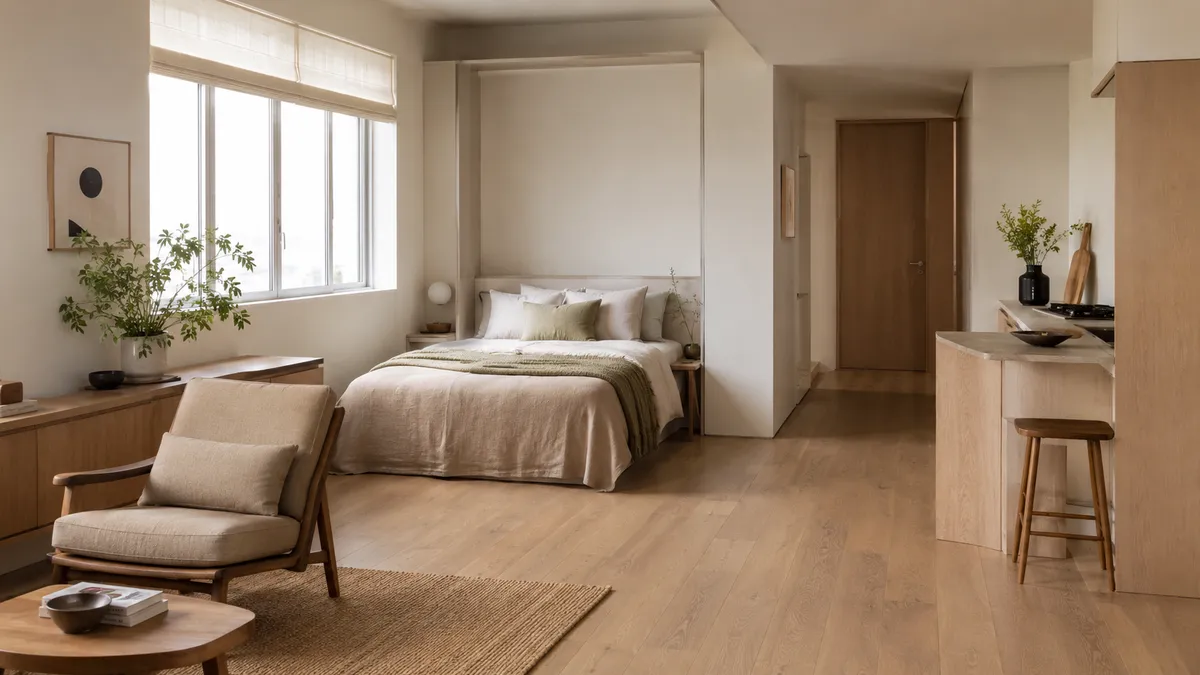
Transforming a compact apartment into a serene, low-visual-noise environment relies on strategic concealment rather than just adding more storage units. The following seven systems combine architectural blending with functional design to reduce visual clutter and restore spatial balance.
1. Camouflaged Monochromatic Cabinetry (The Wall-Fusion Trick)
One of the most common sources of visual noise in a small apartment is not clutter itself—it is contrast.
When storage units stand out sharply from the surrounding room, they naturally draw attention. Dark shelving against light walls, mismatched cabinets, and bulky storage pieces can create visual interruptions that make a space feel busier than its actual size.
Many small-space design resources take the opposite approach: instead of emphasizing storage, they help it blend into the background.
This is where camouflaged monochromatic cabinetry becomes one of the most effective invisible storage systems.
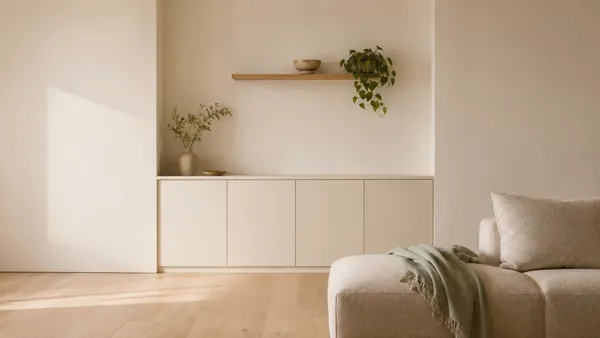
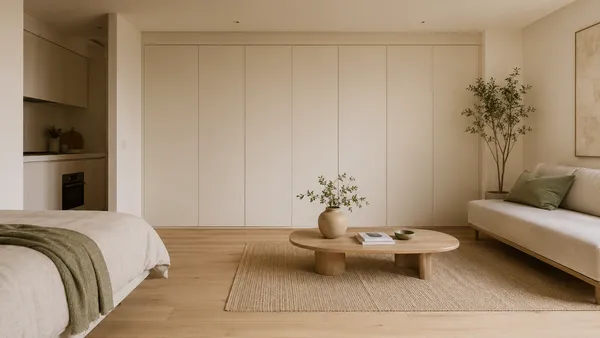
The idea is simple. Storage is designed to sit within the same visual world as the surrounding walls. Similar colors, low-contrast finishes, flat-front doors, and minimal hardware all contribute to a more continuous appearance—a design approach highlighted by Apartment Therapy as an effective way to help prominent room features and storage units hide in plain sight.
Rather than seeing a cabinet first and a wall second, the eye begins to perceive both as part of a larger, uninterrupted surface.
The practical benefit is not necessarily that the apartment gains more storage. The benefit is that the storage becomes less visually demanding.
This principle appears repeatedly in small-space interiors, particularly in apartments where every visible element competes for attention. When cabinets, wardrobes, or storage units visually recede into the room instead of standing apart from it, the overall environment often feels calmer and less crowded.
Importantly, this does not require custom millwork or expensive renovations. In some homes, the effect is achieved through coordinated paint colors. In others, it comes from selecting storage pieces that share similar tones with nearby walls or larger furniture pieces.
The goal is not to make storage invisible in a literal sense. It is to reduce the number of visual interruptions the eye has to process throughout the day.
For people living in compact apartments, that subtle reduction in contrast can sometimes have a larger impact than adding another storage unit altogether.
Achieving this seamless, built-in aesthetic does not require a custom carpentry budget. By carefully modifying accessible modular units, you can recreate this exact architectural flow. Modular Minimalism: 7 Low-Visual-Noise IKEA Systems That Make Studio Apartments Feel Twice as Large Discover how specific modifications to standard flat-pack furniture can transform bulky pieces into calm, integrated walls that expand your spatial perception.
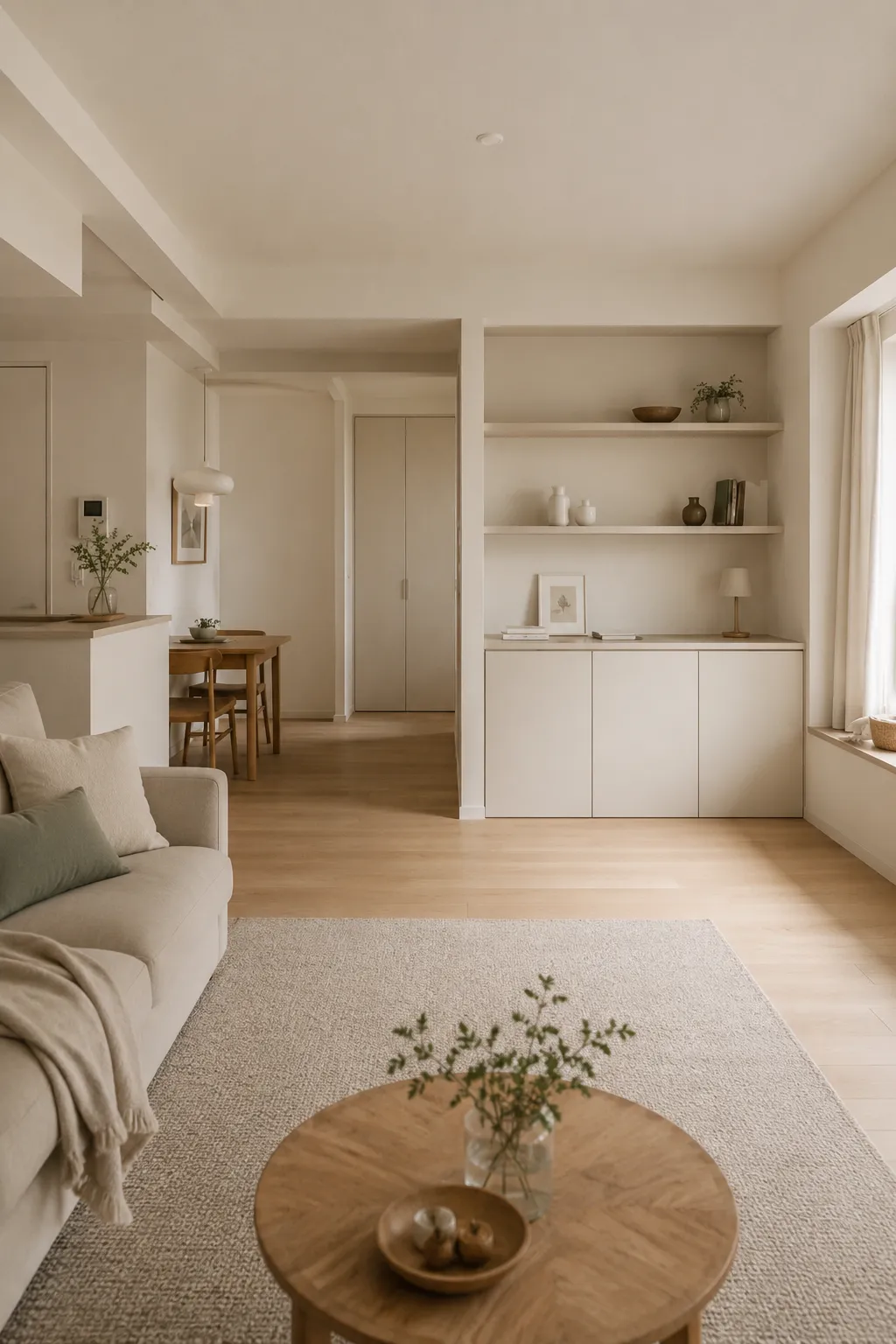
2. Handleless, Push-to-Open Modular Storage
Not all visual noise comes from the objects being stored.
Sometimes it comes from the storage system itself.
In a small apartment, every visible detail contributes to the overall visual experience of a room. Handles, knobs, exposed brackets, decorative trim, and heavily segmented cabinet fronts may seem insignificant on their own, yet together they create a dense layer of visual information that the eye continually processes.
This is one reason many contemporary approaches to minimalist apartment organization lean toward handleless and push-to-open storage systems.
The appeal is not simply aesthetic. It is functional from a visual perspective.
When storage surfaces appear smoother and less interrupted, the eye can move across the room with fewer stopping points. Instead of noticing dozens of individual elements, the brain begins to perceive larger, more unified surfaces. The result is often a space that feels quieter and less visually demanding, even though the amount of storage remains unchanged.
The same principle applies beyond built-in cabinetry.
Modular storage systems with simple fronts, concealed hardware, and clean lines often create a calmer impression than systems that rely on multiple exposed compartments, decorative features, or visible accessories. Both approaches may be equally practical, but they do not always create the same visual experience.
This does not mean every apartment needs a highly minimalist look. Personal objects, books, artwork, and meaningful belongings still have a place in most homes. The underlying focus here is simply reducing unnecessary visual complexity where possible, particularly in the storage systems that occupy large portions of a room.
For small-space living, this can be a useful reminder: the effectiveness of a storage solution is not measured only by how much it holds. It is also influenced by how much visual effort it requires from the people living around it every day.
3. Ghost Zoning: Low-Profile Elevated Under-Bed Systems
One of the easiest ways to increase visual noise in a small apartment is to give every belonging equal visibility.
In practice, not everything needs to live within sight every day.
Items that are used regularly deserve convenient access. Items that are used occasionally may benefit from a different approach. Seasonal belongings, extra linens, holiday decorations, spare luggage, and other infrequently used items often occupy valuable visual and physical space despite spending most of the year untouched.
This is where seasonal storage zones can be helpful.
Rather than treating storage as a single category, the idea is to organize belongings according to how frequently they are actually used. Daily-use items remain accessible. Weekly-use items stay nearby. Seasonal and rarely used belongings move into lower-visibility areas such as under-bed storage, upper shelves, overhead compartments, or other spaces that do not compete for everyday attention.
The benefit is not simply better organization.
It is a reduction in unnecessary exposure.
When infrequently used belongings are removed from the daily visual environment, these seasonal zones offer practical, low-visual-noise storage that helps small spaces feel lighter, without requiring anyone to own fewer things. The apartment remains functional, but the visual field becomes less crowded.
Many small-space living guides recommend under-bed storage because it makes use of an area that would otherwise remain empty. However, the larger principle is more important than the location itself. The goal is not to put everything under the bed. The goal is to reserve prime visual space for the belongings that actively support everyday life.
There is also value in moderation. Overfilled storage zones can become difficult to maintain and easy to forget. As noted by Good Housekeeping, under-bed storage tends to work best when reserved for seasonal or infrequently used items, rather than objects that require constant, daily access.
For small apartments, a useful question is often not, “Where can this item fit?” but rather, “How often does this item deserve a place in my daily view?”
That small shift in perspective can help reduce visual noise without adding a single new storage unit.
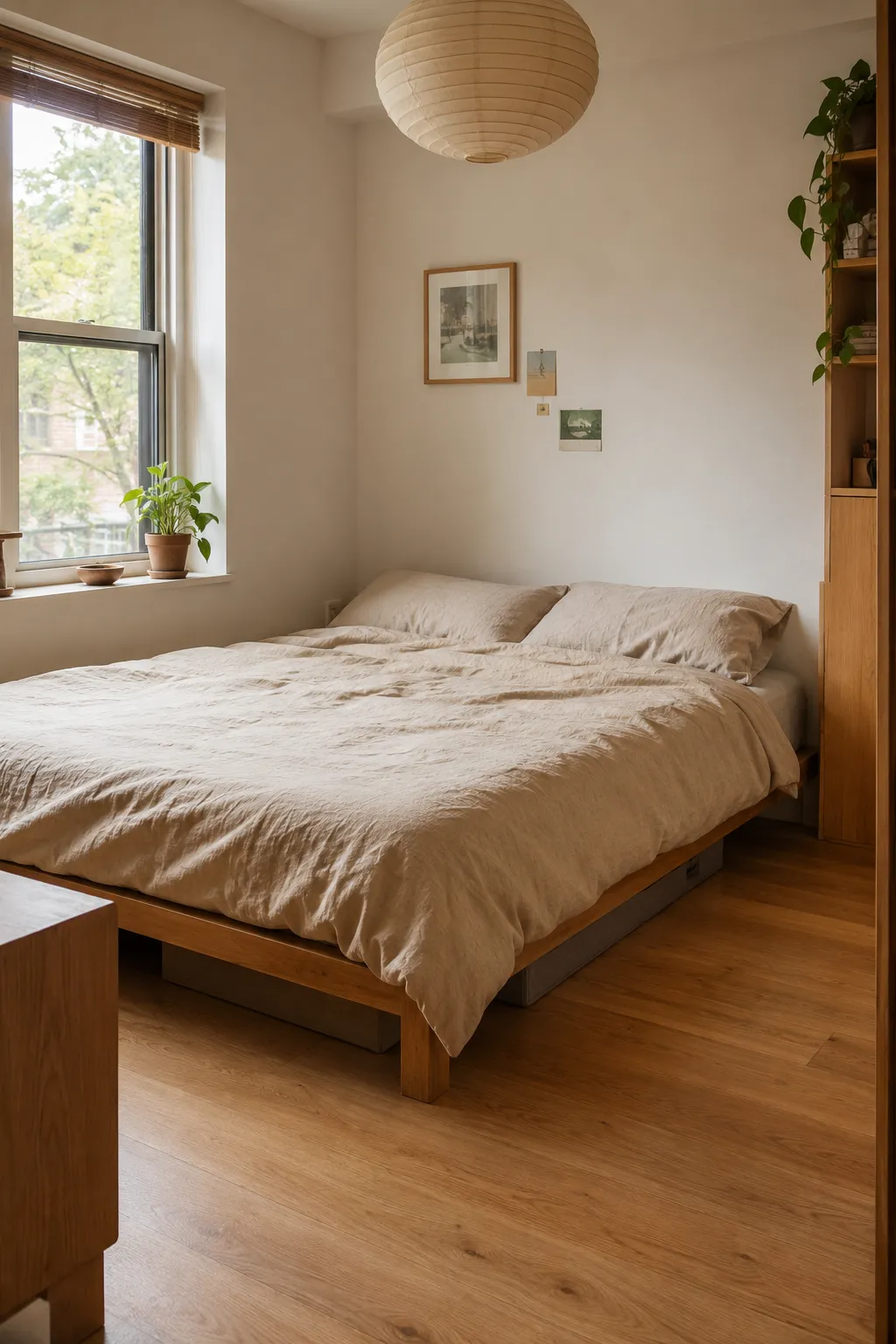
4. Vertical Track Shelving Color-Matched to Wall Paint
One of the most limited resources in a small apartment is not storage space.
It is open space.
As storage gradually accumulates, many apartments begin to lose something that is difficult to measure but easy to feel: visual breathing room. Additional cabinets, baskets, side units, and storage furniture may solve one problem while quietly creating another. The room becomes more organized, yet it can also begin to feel heavier and more crowded.
This is one reason vertical storage appears so frequently in small-space living discussions.
Rather than expanding outward across the floor, vertical systems make use of wall height that often goes underutilized. Track shelving, adjustable wall-mounted systems, and other vertical storage approaches allow belongings to move upward instead of outward, helping preserve more visible floor area.
The practical advantage extends beyond storage capacity.
When more of the floor remains visible, the room often feels more open and easier to navigate. Designers frequently reference sightlines and floor visibility when discussing compact interiors because these elements influence how spacious a room appears, regardless of its actual dimensions.
Color matching can further support this effect.
When shelving systems share a similar tone with the surrounding wall, they tend to create fewer visual interruptions than strongly contrasting storage units. The shelves remain functional, but they draw less attention to themselves.
Importantly, vertical storage works best when it supports daily life rather than dominating it. A few carefully used shelves may help maintain openness. An entire wall packed with visible objects can quickly reintroduce the visual noise the system was meant to reduce.
For many small apartments, Rather than attempting to maximize every available inch, this approach prioritizes protecting a sense of openness while creating enough storage for everyday needs.
Vertical storage can be one practical way to do both at the same time.
5. Floating Micro-Consoles Behind Floor-Length Mirrors
In many small apartments, storage challenges are not caused by a lack of solutions.
They are caused by a lack of space for additional furniture.
A room may already contain a sofa, a bed, a dining surface, lighting, and essential storage. Adding yet another piece of furniture can solve one problem while creating a new source of visual weight.
This is where layered functionality becomes useful.
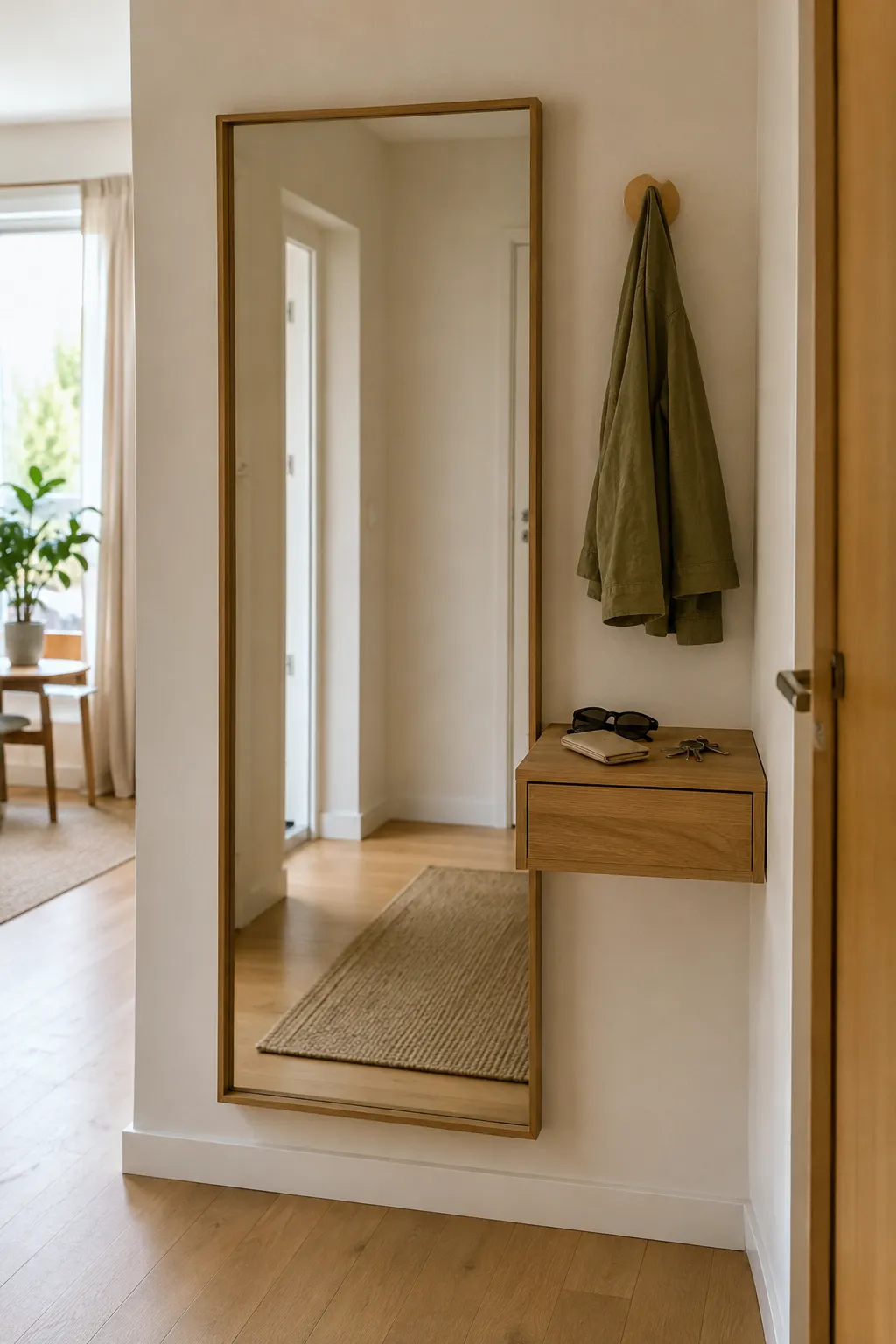
Rather than introducing a completely new storage piece, some small-space layouts quietly combine multiple functions within the same footprint. One example is the use of a narrow floating console positioned behind or alongside a floor-length mirror.
The storage itself may be relatively modest. A small surface for keys, mail, charging devices, or everyday essentials is often enough. The larger benefit comes from how the arrangement behaves visually.
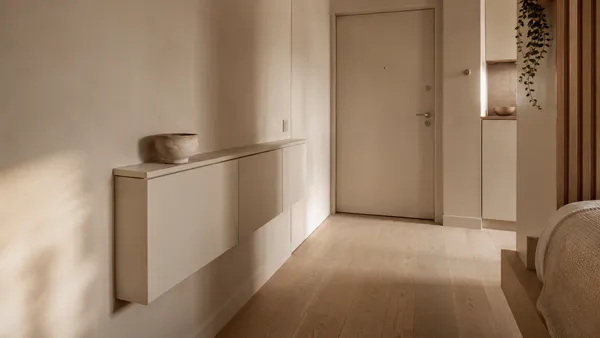
Because the mirror remains the dominant element, the storage layer tends to recede into the background. Daily necessities remain accessible, yet the overall setup often feels lighter than a traditional console table paired with multiple visible accessories.
Mirrors are also frequently used in compact interiors because they help reflect light and extend sightlines. When combined with low-profile storage, they can support both functionality and visual openness without demanding additional floor space—a spatial design principle supported by Livingetc, where interior designers emphasize using long mirrors in narrow entryways to attract light and instantly add depth.
This approach is particularly useful for items that benefit from having a dedicated home but do not need constant visual attention. Keys, chargers, wallets, sunglasses, and other small essentials often create disproportionate amounts of visible clutter when they migrate between surfaces throughout the apartment. A discreet storage layer can help contain those items while maintaining a calmer visual environment.
The broader lesson is not about mirrors specifically. It is about finding opportunities where one area of the home can perform multiple roles without increasing visual weight.
In small apartments, that balance often matters more than simply adding more storage.
6. Invisible Dual-Purpose Furniture (Zero-Friction Multi-Taskers)
Many storage systems look effective in photographs.
Far fewer remain effective in everyday life.
One challenge of small-space living is that storage must compete with convenience. A perfectly organized system may still fail if it requires too many steps to use consistently. Over time, even well-intentioned habits tend to drift toward the easiest available option.
This is one reason dual-purpose furniture appears repeatedly in discussions about successful small-apartment living.
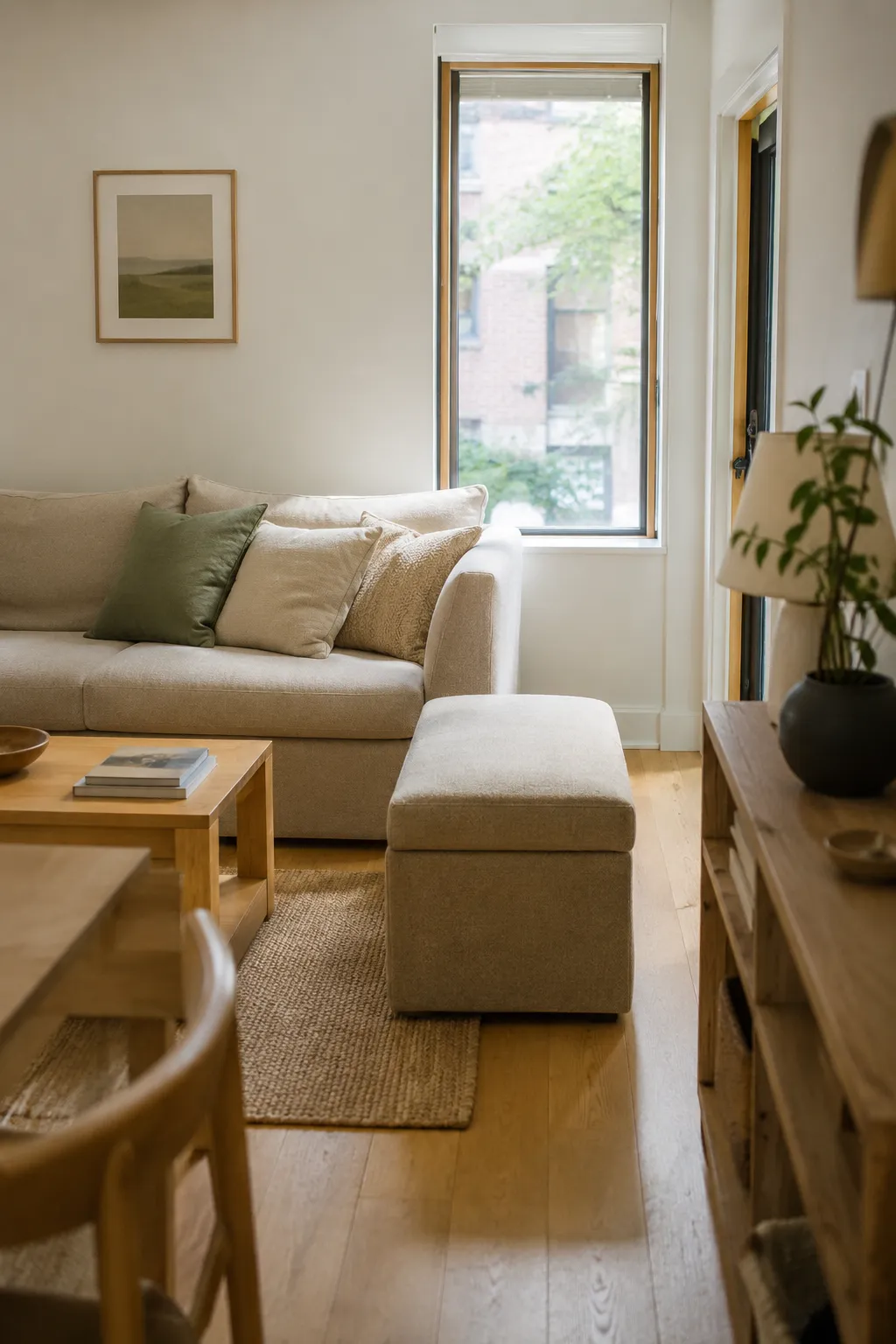
Storage beds, benches with concealed compartments, lift-top coffee tables, and storage ottomans all share a common characteristic: they combine an existing activity with a storage function that already occupies the same footprint.
The advantage is not simply efficiency.
It is reduced friction.
Instead of walking to another room, opening a separate storage unit, or maintaining multiple organizational systems, everyday items remain close to where they are actually used. Blankets stay near seating areas. Seasonal bedding remains inside the bed itself. Living-room essentials can be stored within furniture already used every day.
This principle aligns with a recurring observation across small-space living communities: systems tend to survive when they fit naturally into existing routines. As highlighted by Real Simple, organizational systems only succeed in the long run when they are designed to match our actual, daily habits rather than working against them.
Consequently, the most successful storage solutions are often not the largest or most creative. They are the ones that require the least friction and effort to maintain.
Importantly, dual-purpose furniture is not a requirement for creating a calmer apartment. Many homes function perfectly well without it. However, for people working within limited square footage, furniture that quietly performs more than one role can reduce both physical clutter and the number of visible storage pieces needed throughout a room.
In that sense, the furniture becomes almost invisible—not because it disappears, but because it eliminates the need for additional storage elsewhere.
The result is often a space that feels simpler to maintain and easier to live with over time.
7. Concealed Perimeter Drop-Down Overhead Storage
Not every belonging needs to occupy eye-level space.
In many small apartments, the most valuable visual territory is not the floor or even the walls. It is the collection of sightlines that shape how a room feels the moment someone enters it.
When frequently viewed areas remain relatively clear, a home often feels calmer and more open. When those same sightlines become crowded with boxes, supplies, seasonal items, and rarely used belongings, visual noise can accumulate surprisingly quickly.
This is where concealed overhead storage can serve a useful role.
By relocating infrequently used items toward the upper perimeter of a room, storage shifts away from the areas that receive the most visual attention during daily life. Seasonal decorations, archived documents, spare household supplies, travel gear, and other occasional-use belongings can remain accessible without competing for space within primary sightlines.
The exact form may vary from one apartment to another. Some homes use enclosed upper cabinets. Others rely on discreet overhead compartments or built-in storage zones positioned above eye level. The specific solution matters less than the underlying principle.
Visibility should be earned by frequency of use.
Items that actively support everyday life deserve convenient access. Items used only a few times each year rarely need a permanent presence within the main visual environment of the home.
As with many of the systems discussed throughout this article, moderation remains important. Overhead storage that becomes overloaded or visually crowded can reintroduce the same sense of overwhelm it was intended to reduce.
Used thoughtfully, however, perimeter storage can help protect what may be one of the most limited resources in a small apartment: a clear and comfortable visual field.
This does not mean hiding your life away; instead, it reserves attention for the things that matter most in daily living.
Renter-Safe Execution: Crafting Seamless Storage Without Damaging Walls
Many examples of invisible storage are shown in professionally designed homes, custom renovations, or apartments with built-in cabinetry. For renters, that can sometimes make low-visual-noise living feel out of reach.
Fortunately, the underlying principles behind these systems are often more flexible than they first appear.
The goal is not to recreate a magazine-worthy interior. The goal is to reduce visual noise in ways that fit the realities of everyday living, including lease restrictions, limited budgets, and temporary housing situations.
Across renter-focused storage guides and small-space living communities, a recurring pattern appears: many of the most effective solutions rely on removable, adaptable, or freestanding systems rather than permanent modifications. This is frequently demonstrated by Apartment Therapy in their curation of clever, damage-free storage swaps that maximize tight spaces without requiring structural changes or risking security deposits.
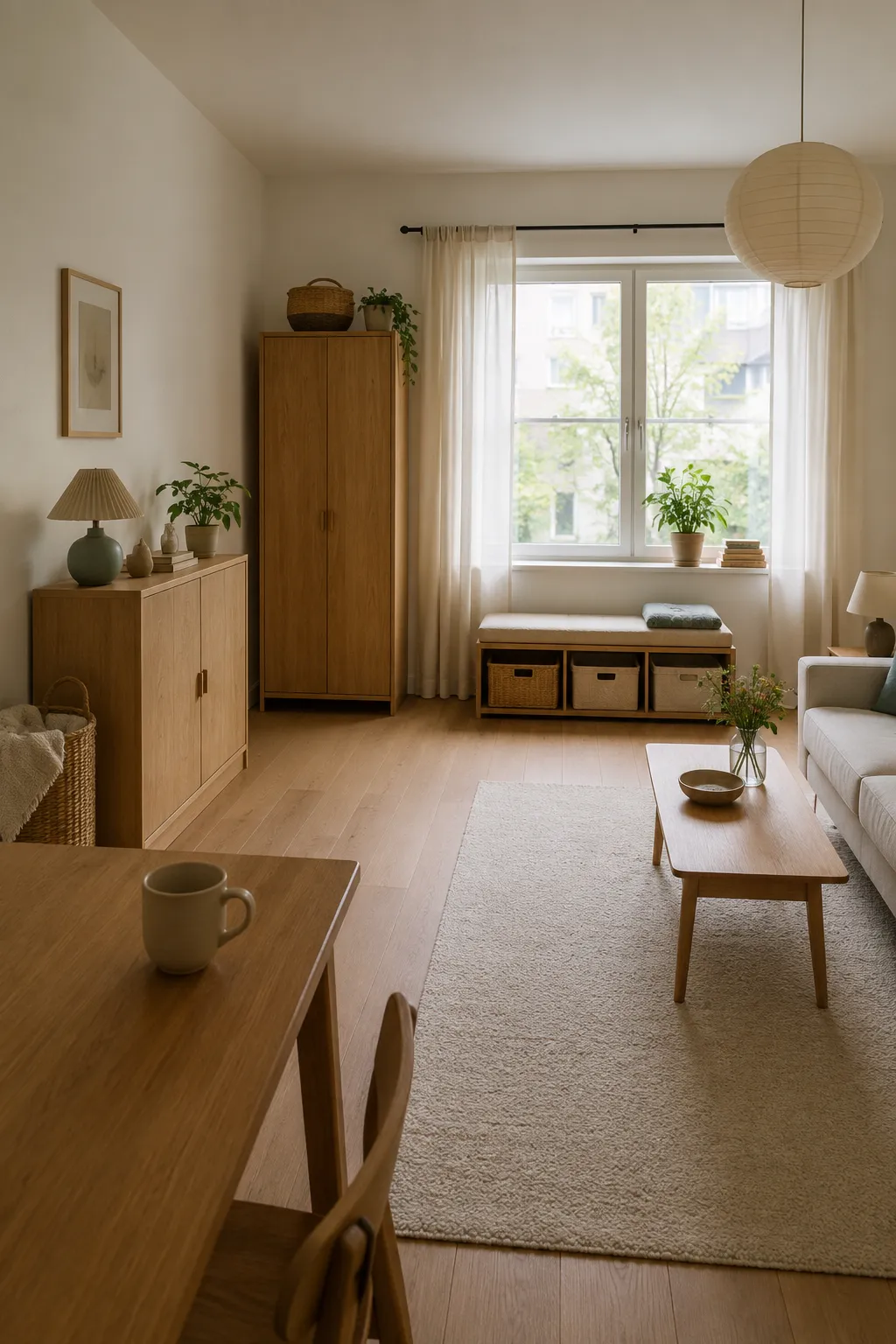
Tension-mounted shelving, freestanding wardrobes, enclosed storage cabinets, removable organizers, and modular furniture can all support the same objective discussed throughout this article: reducing the amount of visual information competing for attention.
This distinction is important because visual calm is often created through visibility management rather than construction.
A renter may not be able to build custom wall-to-wall cabinetry. However, they can still choose storage that blends into existing surroundings, reduces exposed belongings, preserves open floor space, and supports low-friction daily routines.
In many cases, small adjustments create a larger impact than major projects. Replacing several visible baskets with a single enclosed cabinet, relocating seasonal items away from primary sightlines, or consolidating scattered belongings into furniture with concealed storage can all contribute to a calmer visual environment.
The apartment itself does not need to change dramatically.
Sometimes the greatest shift comes from changing what remains visible each day.
Low-Friction IKEA Hacks for Premium Aesthetic Practicality
When researching small-space layouts, certain IKEA systems appear repeatedly—not necessarily because they are the only options available, but because they illustrate several low-visual-noise principles in a practical and accessible way.
For example, storage collections such as BESTÅ, HAUGA, IVAR, and KALLAX are frequently adapted by apartment residents to create solutions that feel more integrated and less visually demanding than open storage alone.
The most interesting pattern is not the furniture itself. It is how people modify and use it.
Across apartment tours, renter-friendly guides, and real-world setups, recurring approaches include:
- Choosing enclosed storage over fully open shelving when possible.
- Grouping multiple storage functions into a single visual zone.
- Matching storage finishes to surrounding walls or larger furniture pieces.
- Using doors, inserts, or baskets to reduce the number of visible objects.
- Reserving open shelving for a limited number of frequently used or meaningful items.
These adjustments often support the same objective explored throughout this article: reducing visual noise without sacrificing functionality.
Importantly, none of these systems are requirements. Similar principles can be applied using furniture from many different sources. IKEA simply provides widely documented examples of how modular storage can be adapted for compact living situations.
The lesson is not that a specific product creates a calmer apartment.
The lesson is that thoughtful visibility management can often make existing storage feel more effective, regardless of where it comes from.
Strategic Layout Optimization: Positioning Storage to Create Visual Openness
The effectiveness of a storage system is influenced by more than the storage itself.
Placement matters too.
Across small-space living resources, apartment tours, and everyday renter experiences, a recurring pattern appears: storage can be practical, organized, and visually quiet on its own, yet still make a room feel crowded when positioned in the wrong location. Effective small apartment layout optimization relies on balancing functional capacity with architectural flow.
This does not mean there is a single correct layout for every apartment.
However, several observations appear consistently in discussions about creating a more open-feeling space.
Protect Primary Sightlines
The first few areas visible when entering a room often shape the overall impression of the space.
Applying foundational visual openness techniques helps ensure these entry points remain clear. When sightlines remain unobstructed, apartments frequently feel calmer and more expansive. When they become filled with storage units, stacked belongings, or visually busy furniture, the room can feel more crowded regardless of its actual size.
For this reason, many small-space residents choose to reserve the most visible areas for open space, natural light, or a limited number of frequently used items. This spatial logic aligns with the architectural principles detailed by INJ Architects, who emphasize that keeping entrances and primary circulation paths clear of tall, obstructive furniture is essential for allowing sightlines to extend uninterrupted across the home.
Position Taller Storage Along The Perimeter
Large storage pieces are often necessary in compact homes.
The question is not whether they should exist, but where they should live.
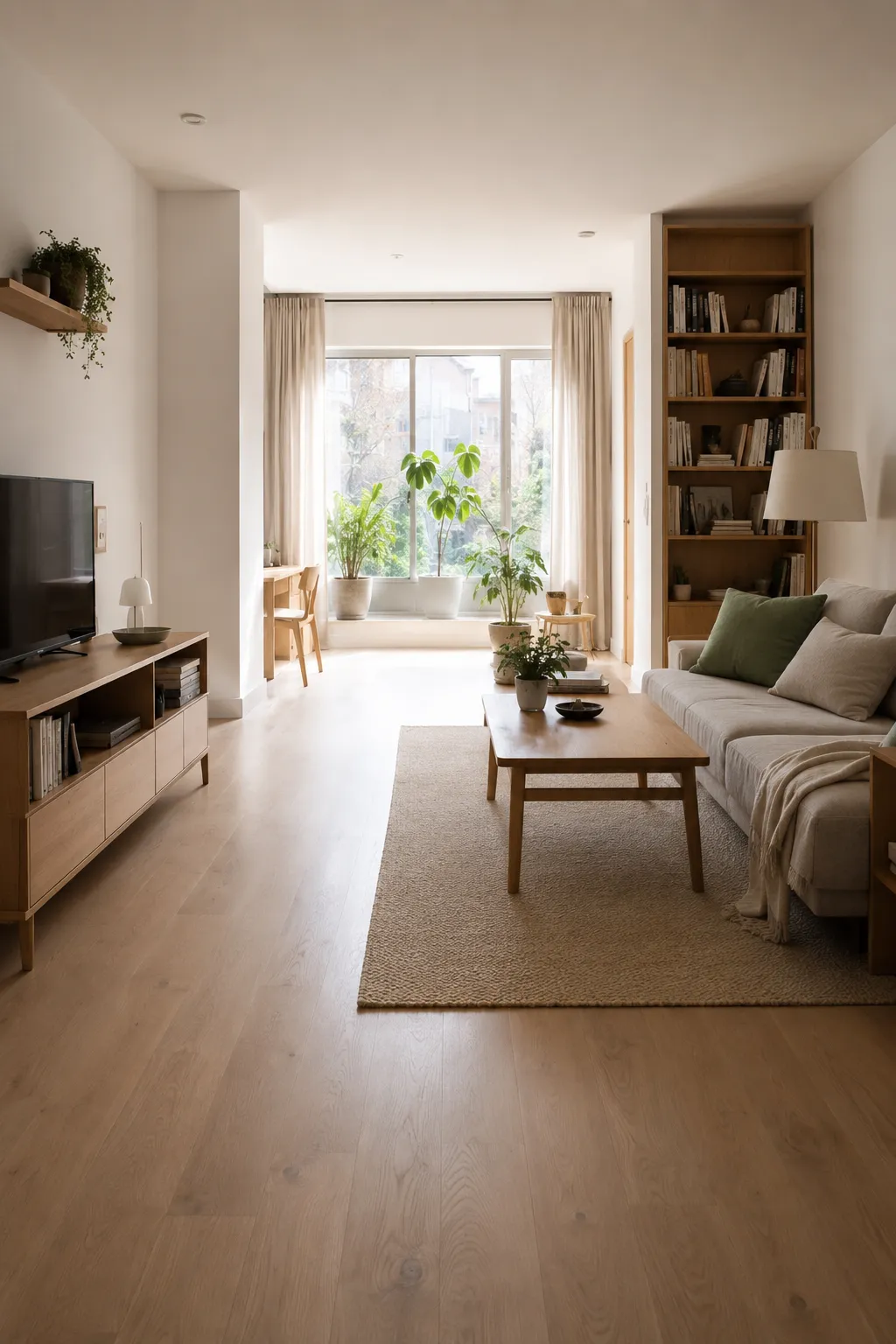
When figuring out how to position storage to make a room look bigger, the most effective strategy is often pushing high-capacity furniture toward outer boundaries. Placing taller storage along the outer edges of a room can help preserve a stronger sense of openness in the center. This approach appears frequently because it allows storage capacity to remain available without interrupting movement or dividing the room visually.
Preserve Everyday Movement Paths
Visual calm is closely connected to physical ease.
When daily movement requires navigating around furniture, squeezing through narrow pathways, or constantly adjusting to obstacles, a room may feel more demanding than its square footage suggests.
Keeping commonly used routes relatively open can help support both comfort and functionality.
The broader lesson is simple.
Storage should support the room rather than dominate it.
Even modest adjustments in placement can sometimes create a noticeable difference in how spacious, comfortable, and visually calm a home feels on a daily basis.
The Tiny Apartment Reset Routine: Maintaining a Zero-Friction Aesthetic Space
The systems discussed throughout this article can help reduce visual noise, but even thoughtful storage solutions benefit from occasional maintenance.
Adopting a regular tiny apartment reset routine does not need to involve deep cleaning sessions, elaborate organizing projects, or a perfectly curated home.
In many small apartments, a brief reset is often enough to prevent visual clutter from gradually returning and sustain long-term zero friction living.
The goal is not perfection.
The goal is to restore the conditions that help a space feel calm, functional, and easy to live in. Learning how to maintain warm minimalism daily comes down to adopting simple, low-effort micro-habits rather than exhausting organizing projects.
While concealed physical systems successfully reduce external clutter, achieving true environmental rest also depends on how your brain processes sensory data. The "Visual Silence" Rule: Why Your Tiny Apartment Feels Mentally Exhausting (And The 15-Minute Calm Reset) Read our foundational guide on Attention Restoration Theory to understand visual fatigue and adopt a daily 15-minute reset routine that protects your mental energy.
1. Clear The Most Visible Surfaces
Kitchen counters, coffee tables, bedside surfaces, and entryway consoles tend to collect small items throughout the day.
Because these surfaces remain constantly visible, even a small amount of accumulation can have a disproportionate impact on how a room feels.
A quick surface reset can often reduce visual complexity without requiring any major organizing effort.
2. Return Everyday Items To Their Assigned Homes
One common pattern in small apartments is that temporary placement gradually becomes permanent storage.
A charger left on a side table, a jacket placed over a chair, or a bag resting near the door may seem insignificant individually. Over time, however, these items can contribute to visual noise.
Returning frequently used belongings to their designated locations helps reinforce the visibility boundaries established by the storage systems themselves.
3. Reset The Entryway Drop Zone
For many households, the entry area becomes a collection point for keys, bags, receipts, mail, sunglasses, and other everyday essentials.
A brief reset of this zone can prevent clutter from spreading into the rest of the apartment.
Because the entryway often creates the first visual impression of a home, even small improvements here can have an outsized impact on the overall feeling of order.
4. Restore Primary Sightlines
Not every object needs to be perfectly stored before a room can feel calmer.
Sometimes the most meaningful improvement comes from protecting the areas that receive the most visual attention.
Taking a moment to restore clear sightlines across the room can help preserve the sense of openness discussed throughout this article.
5. Prepare Tomorrow’s Essentials
A small amount of preparation can reduce tomorrow’s friction.
Setting aside frequently used items, preparing work essentials, or placing everyday belongings where they will be needed next can help prevent the next day’s visual clutter before it begins.
This step supports one of the recurring themes found across small-space living resources: systems tend to work best when they align with everyday routines rather than requiring additional effort.
Conclusion: A Calmer Apartment Is Not Always About Having Less
When a small apartment feels overwhelming, the instinct is often to look for more storage, more organization systems, or another round of decluttering. Sometimes those approaches help. But as many small-space residents eventually discover, storage capacity and visual experience are not always the same thing.
Throughout this article, a recurring pattern appeared across designer insights, small-space living resources, and everyday experiences: what remains visible can influence how a room feels just as much as what is stored away. A space may contain the same belongings, yet feel noticeably calmer when visual competition is reduced and frequently used items are given clearer, more intentional places to live.
That does not mean every surface should be empty or every possession should be hidden. The goal is not perfection, and it is not about creating a home that looks untouched. Instead, it is about making thoughtful decisions about visibility, reducing unnecessary visual pressure, and creating systems that feel manageable in everyday life.
In many small apartments, calm is not necessarily created by adding more storage or striving for perfect organization. More often, it emerges from a quieter visual environment—one where fewer things compete for attention and daily routines require a little less effort.
Small adjustments in what remains visible may not change the size of a room. They may not transform a space overnight. But over time, they can influence how a home feels to move through, return to, and spend time in. And for many people living in smaller spaces, that quieter, easier feeling is often what makes a home feel calmer in the first place.
Sources & References
- Professional Organizers Share What’s Making Your Home Look Cluttered — Maria Sabella | Good Housekeeping
- Try This Technique!: Paint Decorative Elements the Same Color as Your Walls — Dabney Frake | Apartment Therapy
- Clever Storage Under the Bed Is the New Closet Expansion — Shelby Deering | Good Housekeeping
- 6 tricks for positioning mirrors that interior designers always use to make small spaces look bigger — Lilith Hudson | Livingetc
- Want a Tidier Home? Steal These 5 Habits From a Pro Organizer — Kelly Dawson | Real Simple
- The 10 Best Storage Ideas for Small Spaces — Stephanie Nguyen | Apartment Therapy
- Small Space Design Hacks: 10 Ways to Make Your Apartment Feel Larger Without Expanding the Floor Area — INJ Editorial Team | INJ Architects