Visual Clutter Traps: 7 Storage Mistakes Making Your Tiny Apartment Feel Cramped (And Aesthetic Fixes)
Wondering why your home still feels cramped? Learn how understanding visual clutter vs physical clutter can bring instant calm.
Article Information & Navigation
You’ve spent the entire weekend decluttering. Every item is put away, the floors are clear, and technically, your space is perfectly organized. Yet, you find yourself sitting on the couch, looking around, and wondering why your apartment feels cramped despite your best efforts.
It is a common frustration for anyone living in a small space, and it rarely has to do with how well you clean. Often, the root of the problem isn’t the amount of stuff you own, but how that stuff is presented to the eye.
Why “Organized” Still Feels Cramped: The Difference Between Neatness and Calm
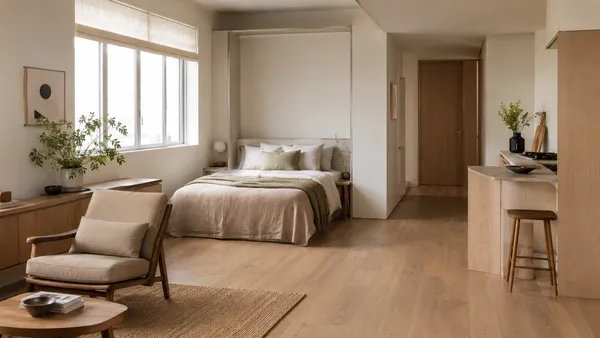
At the core of this issue is the concept of visual clutter vs physical clutter. Physical neatness simply means putting things in their designated spots. Visual noise, on the other hand, is the sheer volume of shapes, colors, and textures your eyes are forced to process at any given moment.
When a tiny apartment is meticulously organized but still feels tight, the cause is almost always this lingering visual noise. It is a state where items may be exactly where they are supposed to be, but the overall space still feels busy and unsettled. Expert insights in interior organization highlight a distinct boundary between an organizing system that is merely functional and one that is calming. Eliminating visual noise by removing everyday objects from primary sightlines directly transforms how you feel and function in your home, finally providing the eye with something clean to rest on Apartment Therapy.
This is a heavily discussed reality in everyday living. In online renter communities like Reddit’s r/ApartmentHacks, residents frequently share a common sentiment: their homes end up looking like functional “storage units” rather than calming environments due to the accumulation of exposed accessories and open storage bins.
Understanding how to reduce visual noise in a small apartment is the crucial first step. The goal of a warm minimalist approach isn’t to force yourself to live with nothing; it is about shifting from purely functional storage to solutions that let the eyes—and the mind—rest.
Mistake 1: The Clear Bin Trap (The Ultimate Visual Noise Generator)
Acrylic organizers and transparent plastic boxes have become a staple in modern organization setups. However, there is a distinct difference between organizing a hidden pantry and styling open shelves in a living area. In the context of visual clutter psychology, clear bins often do more harm than good in exposed spaces.
When transparent storage is used in visible areas, it essentially functions as a display case for everyday, mismatched items. The plastic surface refracts light unevenly, while simultaneously revealing the chaotic colors, shapes, and labels of the objects inside. This forces the eye to process dozens of micro-focal points, explaining exactly why clear acrylic organizers make spaces look messy rather than streamlined.
Professional organizational insights caution that overusing transparent containers actively exposes visual clutter and makes living spaces feel chaotic instead of calm because they showcase internal details rather than concealing them The Spruce. Industry experts note that while clear bins work well behind closed doors, switching to opaque, solid containers is essential in open areas to visually quiet the clutter and create a more intentional environment.
While acrylic bins trap you in a visual retail display, the root cause of this daily exhaustion goes much deeper than clear plastic: The 'Visual Silence' Rule: Why Your Tiny Apartment Feels Mentally Exhausting (And The 15-Minute Calm Reset) Explore the environmental psychology behind visual fatigue and discover how creating 'visual silence' restores your cognitive energy.
The Aesthetic Fix: Opaque, Textured, and Breathable Containers
The most effective clear storage bin alternatives are opaque containers made from natural, light-absorbing materials.
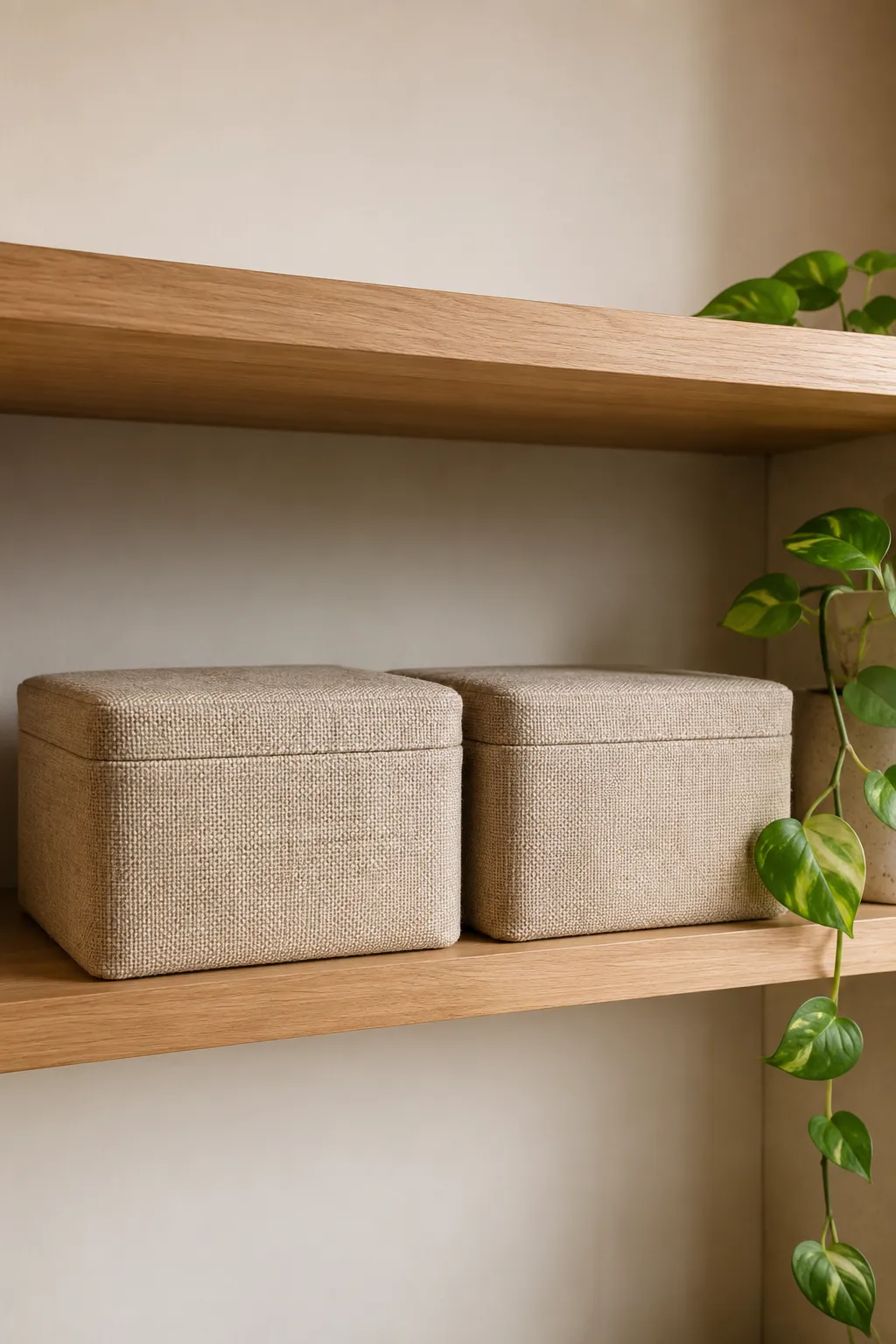
Swapping clear plastic for woven cotton baskets, structured linen bins, or matte wood boxes instantly mutes the visual friction. These materials hide the varied colors of everyday items and replace them with a single, cohesive texture. By using opaque storage, the eye glides over the surface without stopping to register the contents inside, maintaining the quiet flow essential for a warm minimalist aesthetic.
Mistake 2: Using Multiple Small Storage Units Instead of One Anchor Piece
When trying to save floor space, it feels logical to buy smaller furniture. A common progression involves purchasing a short dresser, then adding a rolling wire cart, and later squeezing in a floating shelf to manage overflow. However, this is one of the most frequent space saving furniture mistakes renters encounter.
Using several small, disconnected storage units creates visual fragmentation. Every time the eye moves across the room, it hits the physical boundary of a new piece of furniture. This constant interruption breaks up the floor and wall planes, answering a common design question: does small furniture make a room look smaller? Yes, because it chops the room into microscopic zones, making the area feel heavily furnished and visually crowded.
Spatial design insights regarding small-space scale emphasize that incorporating large-scale, substantial furniture actually makes a tight space feel larger, because utilizing an overscale piece effectively eliminates the need for multiple scattered units that create a cluttered, “dollhouse” look Houzz.
The Aesthetic Fix: Monolithic Storage Systems for Seamless Walls
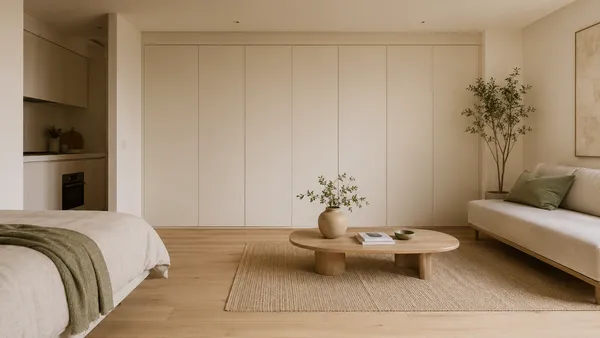
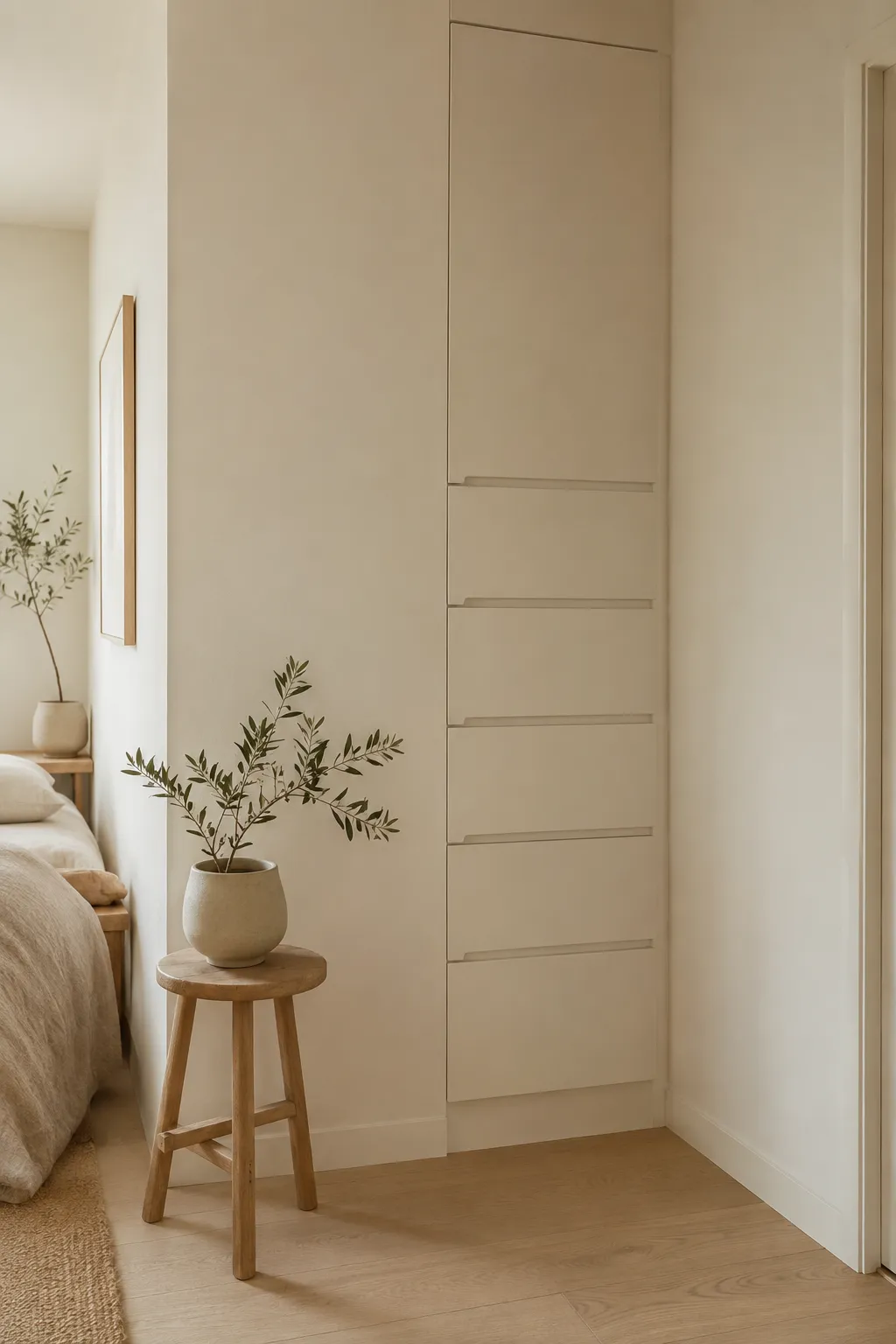
Instead of a patchwork of small shelves and carts, the solution relies on a monolithic storage aesthetic. This involves utilizing one large, continuous anchor piece that acts almost as a false wall.
Investing in a floor-to-ceiling modular wardrobe or a tall, closed cabinet system allows the furniture to blend into the room’s architecture. A monolithic piece consolidates all storage needs behind one clean facade. It reduces the number of visual boundaries, creating the illusion of higher ceilings and a more expansive, uninterrupted living environment.
Mistake 3: Violating the 80/20 Open Shelving Rule
Open shelving is frequently marketed as a breezy, space-saving solution for small apartments. However, ignoring fundamental open shelving rules and treating these surfaces as primary utility storage is a rapid way to generate visual clutter. Stuffing shelves to full capacity eliminates “negative space”—the empty areas around objects that allow the eye to rest and process the room’s dimensions.
Spatial geometry and interior styling rules demonstrate that executing a balanced shelf setup requires strict spatial proportions. Stuffing a shelf to 100% capacity removes essential breathing room and actively stresses the eye; instead, ensuring that around 20% to 30% of the shelf width remains visually open allows the brain to process the display layout with an intentional, calming hierarchy Ashdeco.
The Aesthetic Fix: Curated Displays & Concealed Bulk Storage
The secret to figuring out how to style open shelves without looking cluttered is shifting their purpose from mass storage to curated exhibition.
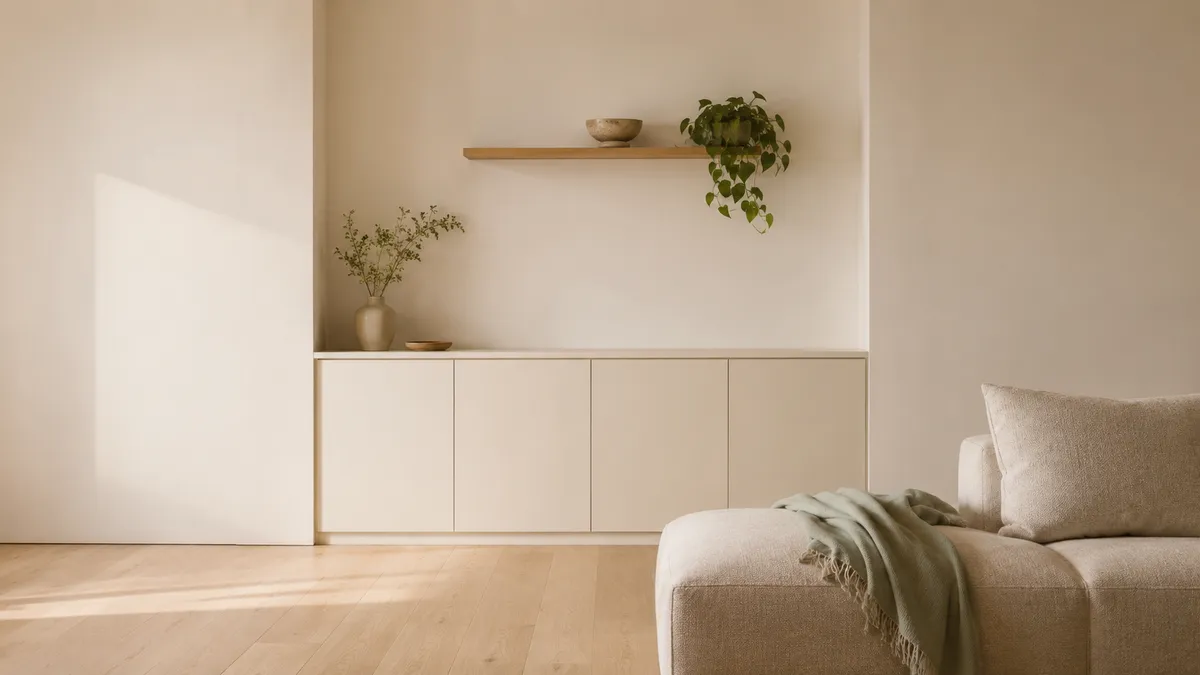
A highly practical approach is the 80/20 division. This means hiding 80% of dense, everyday items—like paperwork, mismatched mugs, and small electronics—behind closed doors or inside opaque drawers. Cultivating a hidden storage aesthetic for the bulk of your belongings allows open shelves to feature just the remaining 20%. By styling only a few intentional, spaced-out pieces (such as a trailing plant, a warm wood frame, or a single ceramic bowl), the shelves maintain an airy, calm atmosphere that elevates the entire room.
Mistake 4: Mismatched Storage Units Breaking the Visual Flow
While contrast can add architectural drama to a large house, high contrast is often the enemy of a tiny footprint. Placing dark storage baskets or a stark black cabinet against a warm white wall forces the eye to constantly register boundaries and obstacles.
When mismatched units break the visual flow, the brain perceives the room as heavily furnished and disjointed. Professional insights into spatial continuity demonstrate that matching furniture, shelves, and box storage to the surrounding wall color effectively renders these features invisible, allowing the eye to float across the room uninterrupted rather than hitting harsh visual breaks Apartment Therapy.
The Aesthetic Fix: Color-Drenching & Tonal Matching
A defining strategy in modern minimalist storage design is tonal matching, heavily inspired by the interior design technique known as color-drenching.
While color-drenching typically involves painting walls, trim, and ceilings the same hue, applying this concept to furniture means intentionally matching storage bins to wall color for aesthetic continuity. By aligning the color of your primary storage units, floating shelves, and baskets with the exact tone of your walls, the functional elements effectively recede into the background.
This camouflage effect makes color drenching small spaces a highly effective tool for renters, softening rigid lines and creating the illusion of a wider, continuous wall plane.
If you want to make bulky cabinets fade gracefully into the background: Invisible Storage: 7 Low-Visual-Noise Systems That Make Tiny Apartments Feel Instantly Calmer Explore 7 renter-friendly, low-visual-noise systems designed to eliminate visual clutter and make small spaces feel instantly calmer without major renovations.
Mistake 5: The “Surface Creep” (Using Countertops as Default Storage)
Horizontal surfaces—like kitchen counters, coffee tables, and entryway consoles—are highly vulnerable to a phenomenon known as “surface creep”. Because these flat areas are accessible and constantly within reach, they intuitively become default landing pads for mail, keys, and daily appliances.
Since countertops sit directly in primary sightlines, accumulating items here sends an immediate signal to the brain that the space is crowded. Learning how to keep kitchen counters clear of appliances and miscellaneous clutter is often more impactful than meticulously organizing the hidden cabinets underneath them. When the eye scans a room and registers clear kitchen counters, the mind naturally interprets the entire apartment as expansive and breathable.
Home organization insights highlight that mitigating counter clutter requires strategic intercept habits, specifically recommending that everyday miscellaneous items like mail and keys be assigned a designated home entirely outside the kitchen—ideally stationed near the front door—to prevent horizontal surfaces from becoming intuitive dumping grounds Homes & Gardens.
The Aesthetic Fix: Wall-Mounted Drop Zones (Vertical Optimization)
The definitive countermeasure to surface creep is establishing dedicated “drop zones” that push storage upward onto the vertical plane.
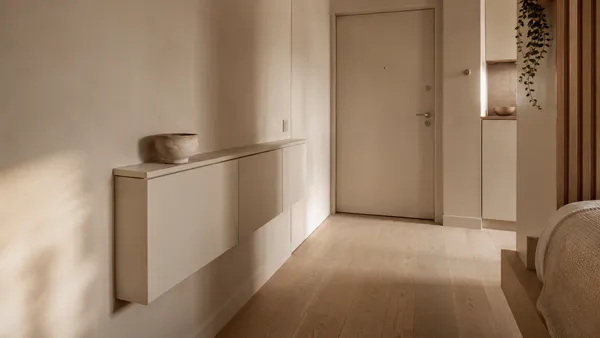
For instance, optimizing an entryway storage setup in a tiny apartment shouldn’t require adding a bulky piece of furniture. Utilizing wall-mounted mail catchers, sleek floating hooks, and magnetic key racks captures the daily influx of items at the door. Shifting the storage burden from tables to walls immediately frees up the floor plan and reduces the visual weight of the room.
To implement wall-mounted drop zones without risking your security deposit or using power tools: Aesthetic Vertical Storage: 7 No-Drill Systems That Make Rental Apartments Look Custom-Built Explore 7 heavy-duty, damage-free vertical systems designed to eliminate surface clutter and give rental apartments a custom-built look.
Mistake 6: “Micro-Organizing” Every Tiny Item (High-Friction Systems)
There is a hidden danger in replicating the perfectly stylized drawer makeovers frequently seen online: the temptation to micro-organize. Decanting every spice into microscopic jars, dividing drawers into rigid grids, and clipping every cord into an individual holder creates what is known as a “high-friction system.”
Falling into this trap is one of the most exhausting over organizing mistakes. High-friction setups require a constant, intense expenditure of energy to maintain. At the end of a long day, the effort required to carefully fit a single item back into its exact micro-slot becomes a barrier. The system gets abandoned, and the clutter rapidly returns. This behavioral pattern explains exactly why complex organization systems fail in small apartments—they demand too much daily effort from the resident.
Professional organization insights regarding viral, hyper-stylized internet trends warn that over-complicating spaces creates unsustainable daily friction; instead, experts advocate for shifting toward “macro systems” built on broad, accessible categories that align with natural human habits rather than adding tedious maintenance chores The Spruce.
If maintaining complex, micro-divided drawers leaves you feeling burned out by your own systems: The 'Hyper-Organization' Trap: Why Over-Organizing Makes Small Spaces Feel Worse Learn why replacing toxic perfectionism with warm minimalist macro-sorting preserves your daily willpower and restores true mental relief.
The Aesthetic Fix: Broad Categorization in Large, Calm Baskets
True warm minimalism relies on the concept of low friction living. Instead of engineering a complex library for everyday belongings, the most sustainable solution is broad categorization.
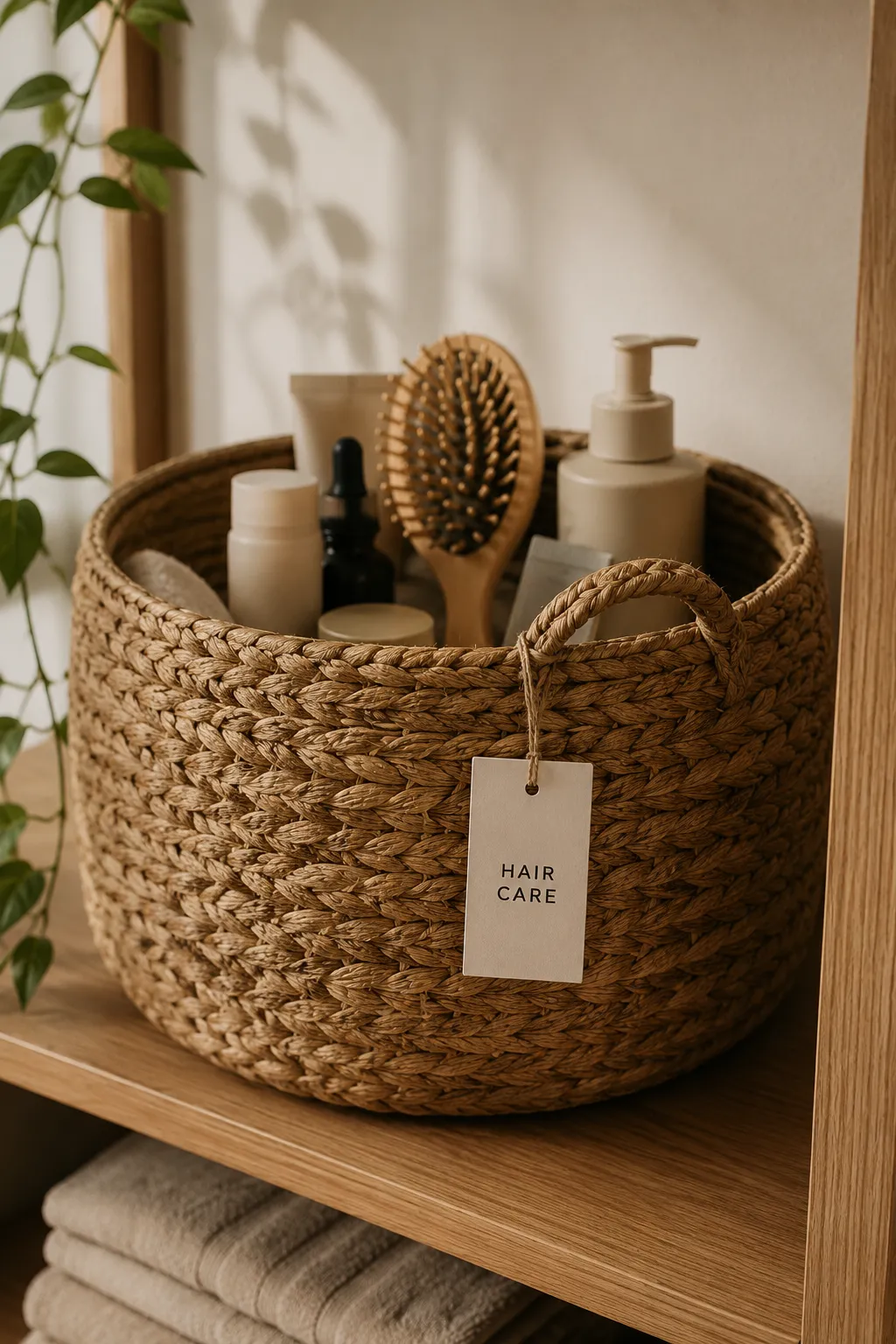
Swap out intricate, multi-compartment dividers for large, opaque, and textured baskets. Rather than separating hair styling tools into distinct acrylic slots, utilize one spacious, breathable basket broadly labeled for “Hair Care.” This “drop and go” approach ensures items are concealed and categorized, but putting them away requires zero extra thought. Low-friction living prioritizes the ease of maintenance, guaranteeing the apartment stays visually quiet without the burden of constant management.
Mistake 7: Exposed Under-Bed Storage Boxes Disrupting Ground Space
Utilizing the area underneath a bed is a universally accepted tactic for renters trying to maximize a small footprint. However, a major aesthetic misstep occurs when these storage solutions are left partially exposed. When plastic bins or mismatched boxes peek out from beneath the bedframe, they interrupt the continuous visual line of the floor.
This disruption of the ground plane explains exactly why figuring out how to hide under bed storage in a studio apartment becomes such a critical design factor; if the floor appears cluttered or visually chopped up, the entire room immediately feels cramped and heavy.
Spatial design guidelines from Apartment Therapy emphasize that while maximizing under-bed square footage is essential for small-space serenity, visual scale is preserved only when storage remains completely concealed—recommending tailored dust ruffles, bed skirts, or solid low-profile drawers to mask the functional underbelly of the bed and maintain an uninterrupted floor plane.
The Aesthetic Fix: Ghost Zoning & Low-Profile Covered Systems
To capture this valuable square footage without sacrificing visual calm, apply a spatial concept known as “ghost zoning.” This means the storage capacity exists, but it remains entirely invisible to the naked eye.
The most straightforward approach for hidden under bed storage is utilizing a meticulously tailored bed skirt in a warm, neutral fabric, such as heavy linen or textured cotton. This simple addition drapes cleanly to the floor, instantly masking any functional bins behind it.
Alternatively, investing in aesthetic under bed boxes—specifically low-profile wooden drawers featuring built-in dust lips—creates a seamless, custom-built look. These wooden additions mimic the architecture of the bed frame itself, ensuring the floor area remains visually quiet and uninterrupted.
The Snug & Still Reset: Transforming Your Clutter Traps This Weekend
Creating a calming home environment does not require a massive budget, nor does it demand a ruthless purge of all your personal belongings. The core philosophy of a warm minimalist organization approach is simply managing the visual load your eyes are forced to process every day.
For those looking to build a realistic, low-friction weekend apartment organization routine for renters, the most effective strategy is to start incredibly small. Attempting to overhaul an entire apartment in 48 hours inevitably leads to decision fatigue and burnout.
Instead, implement a tiny apartment reset routine this weekend by choosing just one visual clutter trap from this list to address:
- Swap: Exchange a single clear acrylic bin in an open area for an opaque, breathable woven basket to instantly hide internal visual chaos.
- Clear: Empty one major horizontal countertop or console, and completely redirect that daily influx toward a vertical drop zone or a hidden drawer.
- Mask: Add a tailored, heavy linen bed skirt to your frame to instantly smooth out the floor plane and conceal utilitarian storage boxes.
By making just one intentional adjustment at a time, you immediately reduce the cognitive overload in your space.
Shifting your apartment from a highly functional storage unit into a spacious, deeply restful home doesn’t happen by changing your entire footprint—it happens by clearing the visual noise, one square foot at a time.
Sources & References
- 8 Ways to Reduce Visual Clutter so Your Kitchen Looks and Functions Better — Shifrah Combiths | Apartment Therapy
- Organizers Say These Instagram Storage Trends Lead to Regret—Here’s What Works Instead — Emily Benda Gaylord | The Spruce
- Large-Scale Pieces Give Small Rooms Massive Style — Lisa Frederick | Houzz
- The Bookshelf Rule: Designer Math Behind the 70/30 Ratio — Ashdeco Design Team | Ashdeco
- Try This Technique!: Paint Decorative Elements the Same Color as Your Walls — Dabney Frake | Apartment Therapy
- 10 tasks to do daily to keep kitchen counters clear – and clutter-free — Tara King & Millie Hurst | Homes & Gardens
- Would You Put Art in Your Fridge? Why This Viral Trend Has Pro Organizers Divided — Shagun Khare | The Spruce
- 3 Simple Under Bed Storage Ideas That Will Help You Get the Most Out of Your Space — Jessica Isaac | Apartment Therapy