The "Low-Friction" Apartment: 7 Innocent Habits That Create Mental Noise in Small Spaces
Discover how well-intentioned small space living habits create unseen cognitive load, and learn how to build a calm, low-friction apartment setup.
Article Information & Navigation
You walk through the door, take off your coat, and look around. The dishes are put away, the floor is clear, and technically, your home is tidy. Yet, instead of feeling an immediate wave of relief, you experience a subtle, lingering sense of mental tightness.
If this scenario sounds familiar, the issue isn’t your square footage, and it certainly isn’t a lack of organizational discipline. When exploring why a compact home can feel overwhelming even after it has been cleaned, a recurring pattern emerges: it has less to do with the physical items in the room, and more to do with how daily routines interact with a constrained floor plan.
In tight quarters, minor inconveniences compound rapidly. It is incredibly common to adopt what seem like helpful small space living habits, only to discover later that these well-intentioned routines are actively generating a constant hum of mental noise. This creates a hidden layer of cognitive effort—an invisible friction that keeps the brain on high alert long after the workday is over.
For anyone looking into how to live intentionally in a small apartment, the objective shifts away from simply buying more modular storage bins. Instead, the focus turns toward uncovering and smoothing out the invisible resistance in daily movements. By identifying the innocent habits that quietly fuel apartment fatigue, it becomes entirely possible to build a “low-friction” setup—a space designed not just for efficiency, but for genuine mental rest.
What is “Mental Friction”? (The Psychology of Daily Movement)
Understanding the psychology of small spaces often requires looking beyond physical square footage and examining a concept known as “mental friction.” In the context of interior environments, mental friction is the invisible physical and cognitive resistance encountered during daily routines. While shifting a chair to open a cabinet might seem trivial in a large house, in a compact layout, these minor physical inconveniences compound rapidly, creating a disproportionate energy drain.
The feeling of exhaustion tied to this unseen friction is well-documented in environmental studies. According to the Attention Restoration Theory developed by Dr. Stephen Kaplan, the human mind must expend a significant amount of cognitive energy actively blocking out surrounding visual and physical distractions simply to maintain focus. This constant, subconscious filtering contributes heavily to the mental load of clutter, often answering why a tiny apartment feels overwhelming even when everything appears to be put away.
Building on this understanding, environmental design psychologist Dr. Sally Augustin notes that psychological stress and degraded well-being consistently result from a lack of alignment between space design and daily human activity. Within her Spatial Harmony framework, she demonstrates that subtle cues—such as layout, visibility, and intuitive circulation—are essential to reduce environmental friction, allowing the mind to navigate physical spaces naturally without triggering a constant stress response.
This environmental friction directly dictates daily routines. As explored in the environment design frameworks detailed in Atomic Habits by James Clear, human behavior naturally gravitates toward the path of least effort. If a living space operates with high friction—meaning that putting an item back requires multiple steps—maintaining order becomes unsustainable. When a home feels chaotic, it is rarely a failure of willpower; more often, it is a failure of the spatial system.
7 Innocent Habits Fueling Your Apartment Fatigue
When evaluating small apartment habits that create mental noise, the focus narrows down to the micro-interactions repeated throughout the day. Often, the routines adopted to manage a limited layout unknowingly add layers of cognitive resistance. Shifting from a high-maintenance space to a low-friction environment begins with identifying these subtle daily patterns before they turn into permanent spatial friction.
Habit 1: The “I’ll Leave It Out So I Remember” Trap
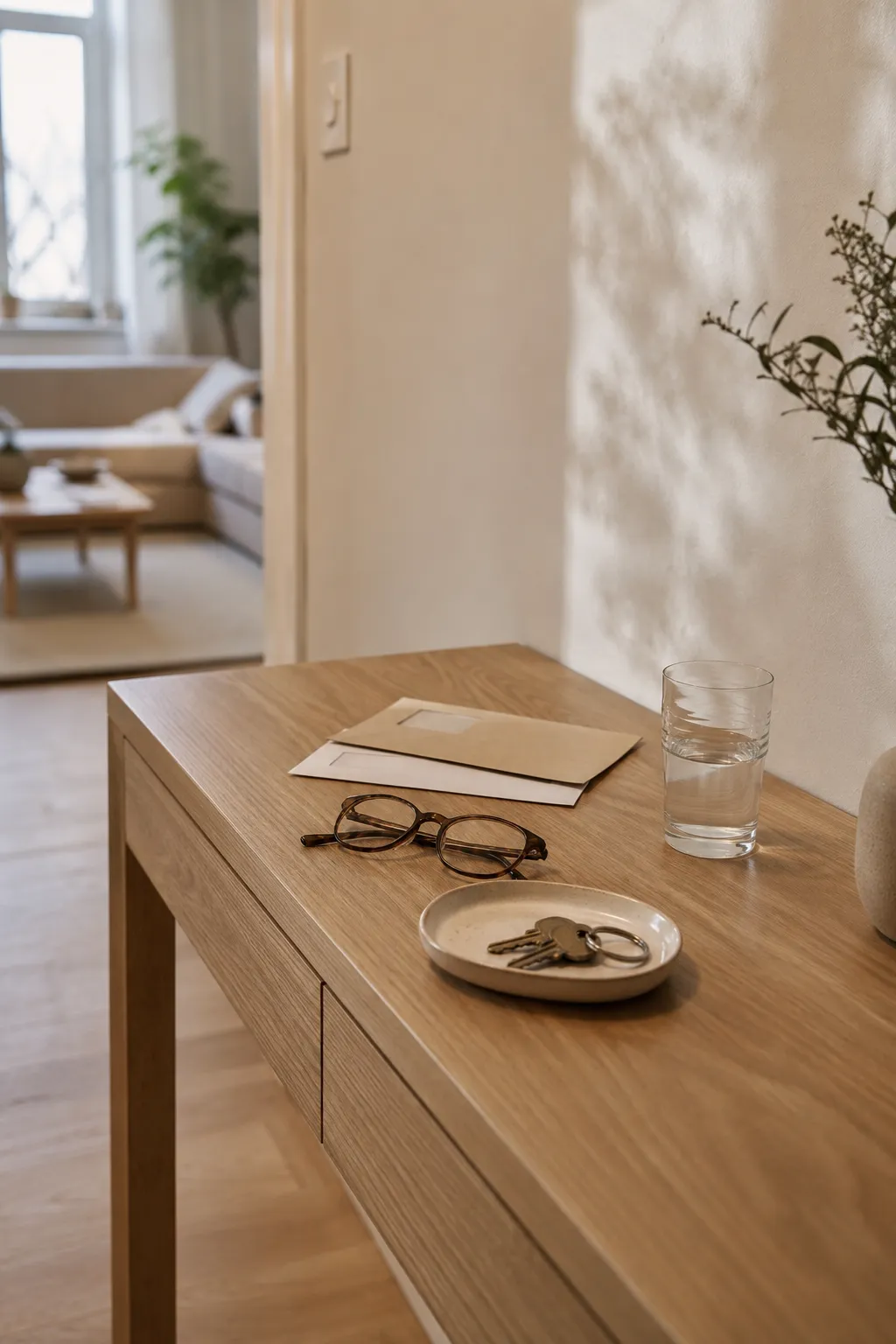
Leaving daily medication, unpaid bills, or returning packages on the kitchen counter as physical reminders is a common coping mechanism. However, relying on the environment as a to-do list actively dismantles the concept of visual silence.
Psychologically, leaving pending tasks in plain sight triggers the Zeigarnik Effect, a well-documented cognitive phenomenon where the brain remembers and fixates on uncompleted tasks far more than completed ones. Every exposed object demands a fraction of cognitive bandwidth. As organizing consultant Marie Kondo highlights in her foundational work, The Life-Changing Magic of Tidying Up, the underlying “visual noise” of commercial packaging and exposed items constantly registers in the subconscious mind. The structural solution is to transition to hidden digital reminders or a designated, closed inbox, allowing the physical surfaces to remain visually quiet.
Habit 2: High-Friction Daily Storage (The “Too Hard to Put Away” Rule)
A storage system that looks aesthetically perfect on social media often fails in real life if it requires too much effort to maintain. Storing a daily-use item—like a hairdryer or coffee beans—inside a pouch, which is placed inside a lidded bin, tucked behind a cabinet door, is the definition of high-friction storage.
This dynamic is best explained by the “20-Second Rule,” a behavioral concept detailed by researcher and author Shawn Achor as one of the core principles in his book The Happiness Advantage. The principle dictates that if initiating a positive habit—such as putting an item away—takes more than 20 seconds of extra friction, human behavior naturally defaults to the path of least resistance. For daily-use objects, maintaining order requires eliminating these micro-barriers through immediate, one-step storage.
Habit 3: Encroaching on Your “Calm Corners”
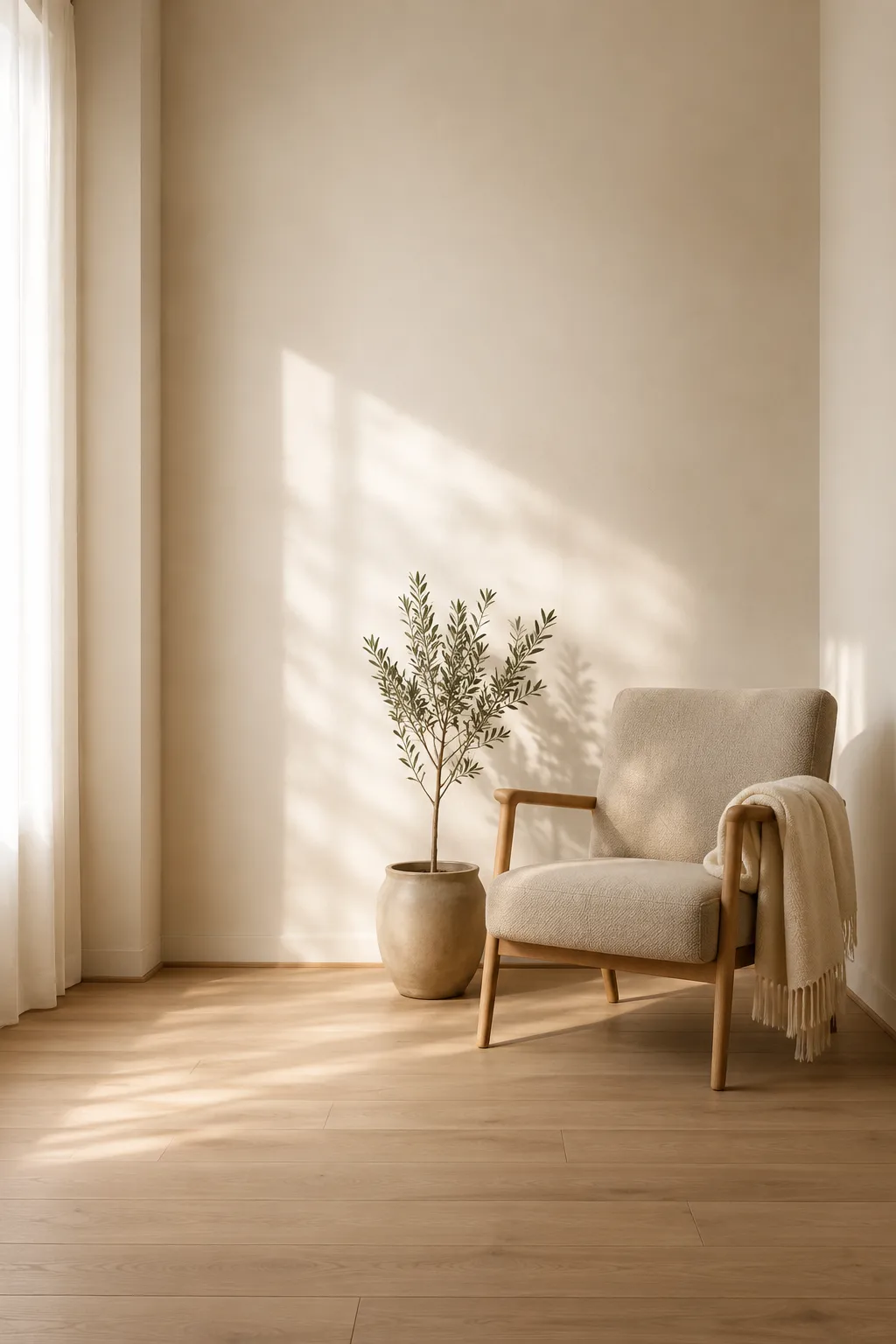
In a compact layout, designating a specific micro-zone entirely for mental recovery is crucial for maintaining emotional geometry. However, an innocent habit is allowing functional clutter to slowly bleed into these dedicated rest zones.
When a resting chair or a quiet reading corner is used to drape a worn jacket or drop a handbag, the brain immediately stops categorizing that specific area as a safe refuge. It reverts to processing the space as an active, functional workspace, effectively destroying its intended psychological purpose.
To protect your rest zones from physical and mental clutter, you can apply a structured spatial framework. The "Calm Corners" Method: How to Make a Studio Apartment Feel Emotionally Bigger This deep dive details how establishing visual boundaries and negative space instantly reduces cognitive load in a single-room layout.
Maintaining a calm corner requires enforcing its boundaries strictly without physical dividers, ensuring that the necessary visual pause remains entirely unbothered.
Habit 4: Storing by “Category” Instead of “Workflow”
When organizing compact layouts, relying on rigid categorical storage can inadvertently introduce unnecessary friction. Organizational expert Shira Gill warns in her book, Minimalista, that over-organizing spaces by strict categories—such as keeping all cleaning supplies exclusively in the bathroom—creates daily resistance when a surface wipe is needed in the kitchen.
The structural alternative is “point-of-use” or workflow organization. Duplicating small, frequently used items and storing them exactly where the task occurs significantly reduces the physical steps required to maintain the space. When the solution is within arm’s reach of the problem, the mental friction required to execute the task drops to nearly zero.
If rigid categorical sorting is creating daily resistance and keeping your home from feeling truly functional, The "Hyper-Organization" Trap: Why Over-Organizing Makes Small Spaces Feel Worse Explore our deep dive into the psychology of organization burnout to learn how shifting from micro-sorting to macro-systems restores immediate mental relief.
Habit 5: The “Holding Basket” Overflow
The concept of a “holding basket” serves as a highly effective temporary buffer for clearing flat surfaces and quickly reducing visual noise during an evening reset. However, the innocent misstep occurs when this temporary tool is treated as a permanent storage bin.
Once the holding basket overflows, it transforms from a low-friction management tool into a new, concentrated source of visual clutter. To remain effective, this system requires a designated “emptying day” (such as a Sunday morning routine). Honoring this boundary ensures the basket remains a functional, transient space rather than a permanent clutter trap.
To understand how this tactical buffer integrates into a wider spatial maintenance strategy, explore our foundational guide. The "Visual Silence" Rule: Why Your Tiny Apartment Feels Mentally Exhausting This deep dive breaks down the environmental psychology of sensory overload and details how a quick 15-minute reset systematically clears visual noise.
Habit 6: Multi-Purpose Overload Without Boundaries
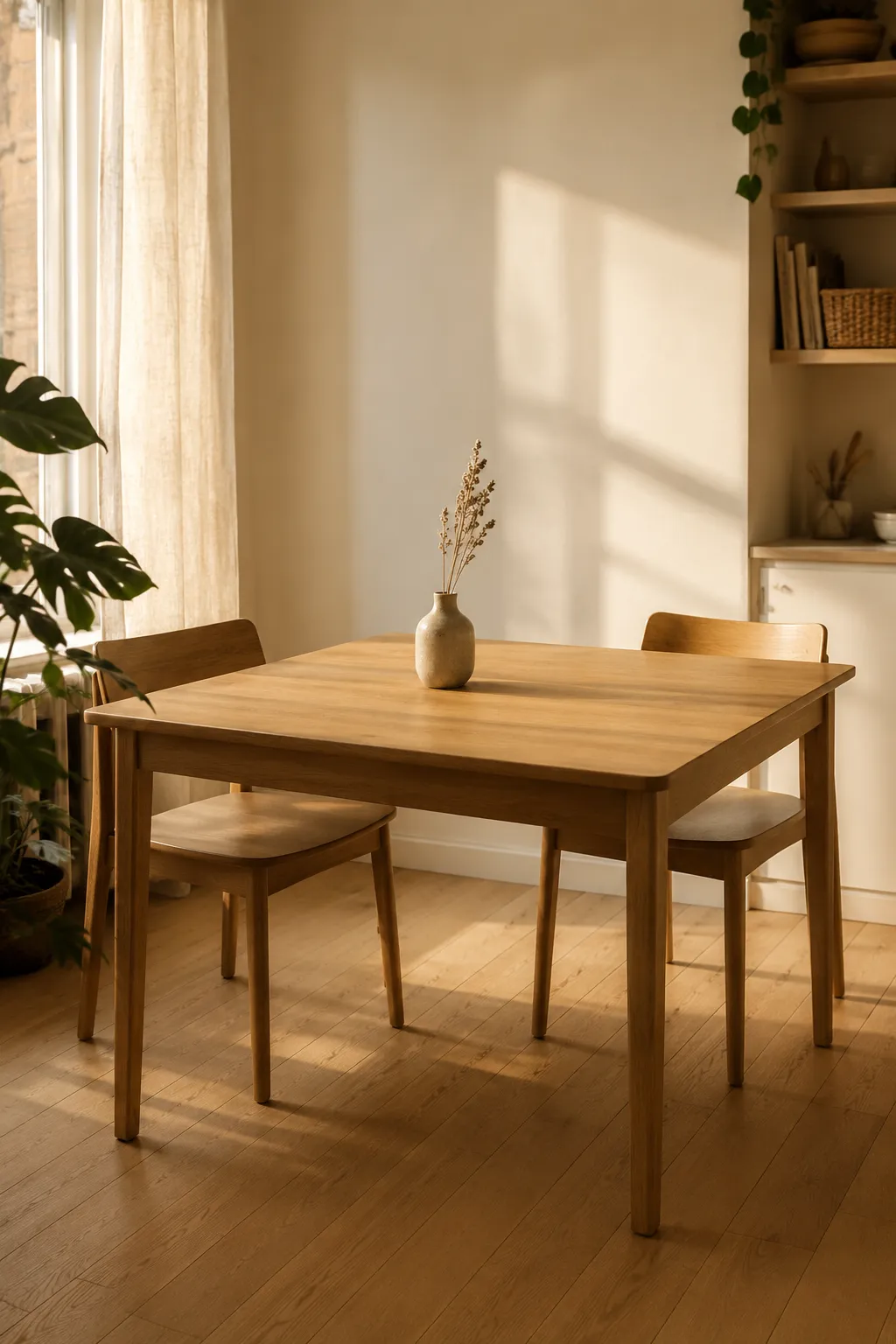
In single-room living situations, a single flat surface—often the dining table—frequently absorbs the roles of a home office, meal prep station, and mail drop. Without implementing intentional boundaries, the brain is forced to continuously process every functional area simultaneously.
As explored in interior designer Ilse Crawford’s holistic philosophy of emotional ergonomics detailed in her book, A Frame for Life: The Designs of StudioIlse, the absence of clear physical boundaries blurs the critical lines between work and rest, preventing true mental recovery. The physical solution lies in establishing a strict “Daily Reset”. The multi-purpose surface must be returned to a completely neutral state each evening to systematically lower the visual volume of the room, signaling to the brain that the functional day has concluded.
To transform this daily reset into an effortless evening habit that restores your boundaries, The "Closing Shift" Routine: How to Put a Small Apartment to Sleep for Mental Relief Discover how a 15-minute sensory reset uses warm lighting and macro-sorting to transition your studio from high-alert work mode to restful recovery.
Habit 7: Ignoring the “Micro-Trash” Phenomenon
It is easy to overlook tiny items like empty water glasses, product tags, receipts, and junk mail because they do not immediately register as a conventional “mess.” Yet, these small items accumulate significant visual weight.
Foundational data from UCLA’s “Clutter Culture” study discovered that a high density of small household objects—even minor items accumulated on surfaces—acts as a visual trigger for chronic stress. Their research proved a direct correlation between these high object densities and elevated levels of cortisol (the stress hormone) in residents. Over time, ignoring this seemingly insignificant micro-trash forces the eyes to continuously scan the environment without finding a visual pause, silently compounding the apartment’s overall cognitive load.
The “Flow State” Reset: How to Build a Low-Friction System
Moving away from the cycle of constant tidying requires a systemic approach. Establishing a tiny home friction reduction system is not about forcing rigid discipline; rather, it focuses on designing out the physical resistance. For those exploring intentional living in small spaces, the objective is to reach a baseline where the environment supports daily routines naturally.
Auditing Your “Hotspots”
In user experience (UX) design, a “hotspot” refers to an area that naturally draws the most interaction. Applied to interior layouts, a hotspot is typically a flat surface—such as an entryway console or a kitchen island—that magnetically attracts daily clutter simply due to its high-traffic location.
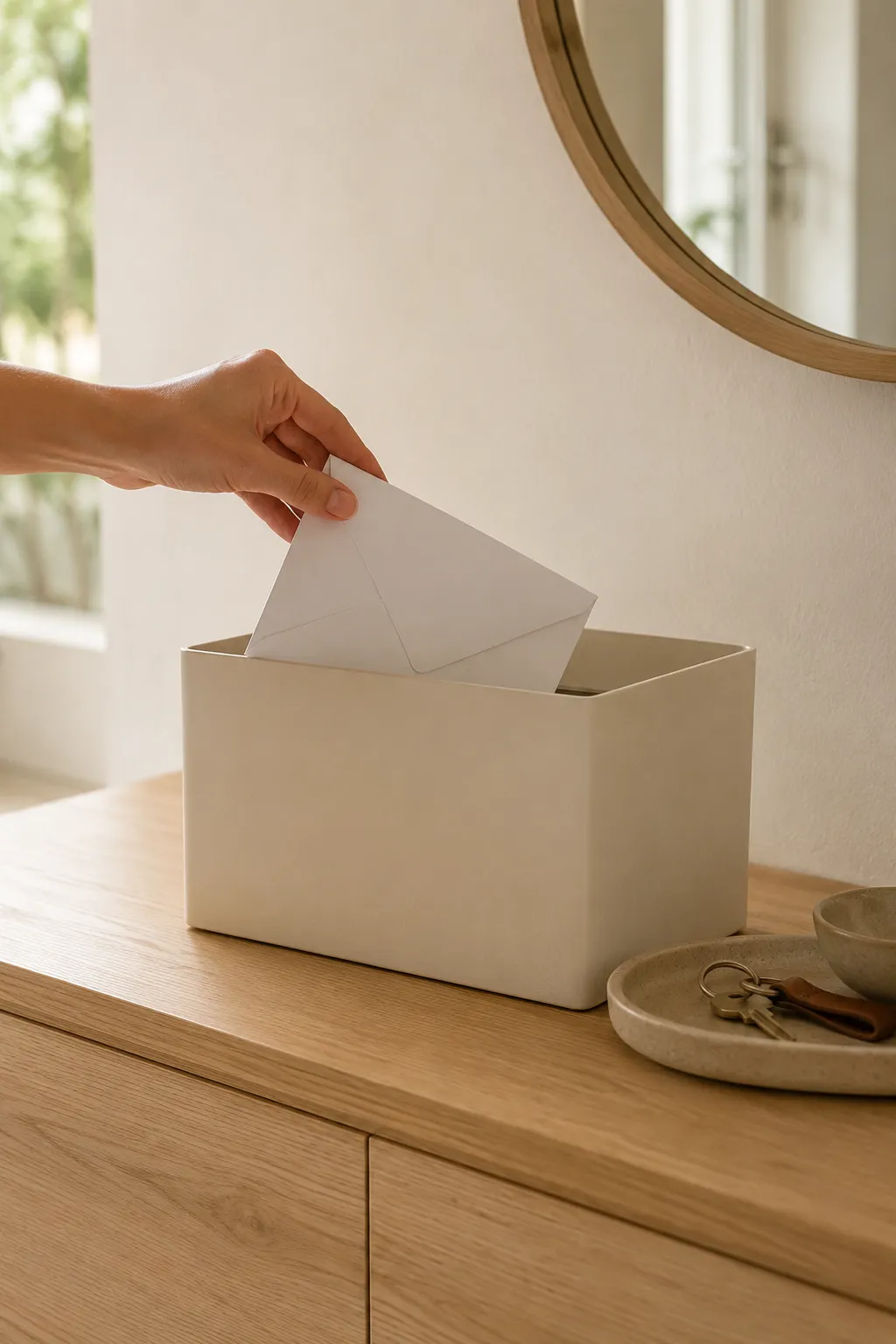
Instead of attempting to drastically alter human behavior to avoid these drop zones, a low-friction approach accommodates the natural workflow. Addressing the friction at these exact locations often involves placing a closed, neutral-toned container right at the hotspot. This allows the daily influx of items to be captured instantly, lowering the visual noise of the room without demanding extra physical steps.
Implementing the “One-Touch” Rule
A classic productivity principle can be highly effective when adapted for spatial organization. The “Only Handle It Once” (OHIO) method, a time-management strategy analyzed by SUCCESS Magazine for its efficiency in preventing cognitive overload and work anxiety, emphasizes immediate completion over delayed processing.
For the One-Touch rule to work effortlessly, your home needs designated concealed destinations that do not add visual weight. Invisible Storage: 7 Low-Visual-Noise Systems That Make Tiny Apartments Feel Instantly Calmer Discover seven renter-friendly systems—from wall-fused cabinetry to zero-friction furniture—that keep daily clutter out of sight and reduce background stress.
When applied to compact living, this translates to the “One-Touch” rule. When an incoming item is picked up—such as the day’s mail, a set of keys, or a coat—it is only touched once and carried directly to its final, hidden storage destination behind closed cabinetry. Understanding how to create a low friction apartment setup relies on eliminating these temporary drop points, solidifying a space that inherently resists mental noise.
Sources & References
- The Restorative Benefits of Nature: Toward an Integrative Framework — Stephen Kaplan | Journal of Environmental Psychology (ScienceDirect)
- The Harmonic Principles: Spatial Harmony — Dr. Sally Augustin & Valerie Jardon | IA Interior Architects
- Zeigarnik Effect — American Psychological Association | APA Dictionary of Psychology
- The Life-Changing Magic of Tidying Up: The Japanese Art of Decluttering and Organizing — Marie Kondo | Ten Speed Press / Penguin Random House
- The Happiness Advantage: How a Positive Brain Fuels Success in Work and Life — Shawn Achor | Crown Currency / Penguin Random House
- Minimalista: Your Step-by-Step Guide to a Better Home, Wardrobe, and Life — Shira Gill | Ten Speed Press / Penguin Random House
- A Frame for Life: The Designs of StudioIlse — Ilse Crawford & Edwin Heathcote | Rizzoli
- The Clutter Culture: UCLA’s Center on Everyday Lives of Families — Jack Feuer | UCLA Newsroom
- How to Reduce Work Anxiety With the ‘OHIO’ Principle — Kayla Ihrig | SUCCESS Magazine