The "Hyper-Organization" Trap: Why Over-Organizing Makes Small Spaces Feel Worse
Discover why over-organizing small spaces causes burnout. Learn how to replace toxic organization with warm minimalism for true mental relief.
Article Information & Navigation
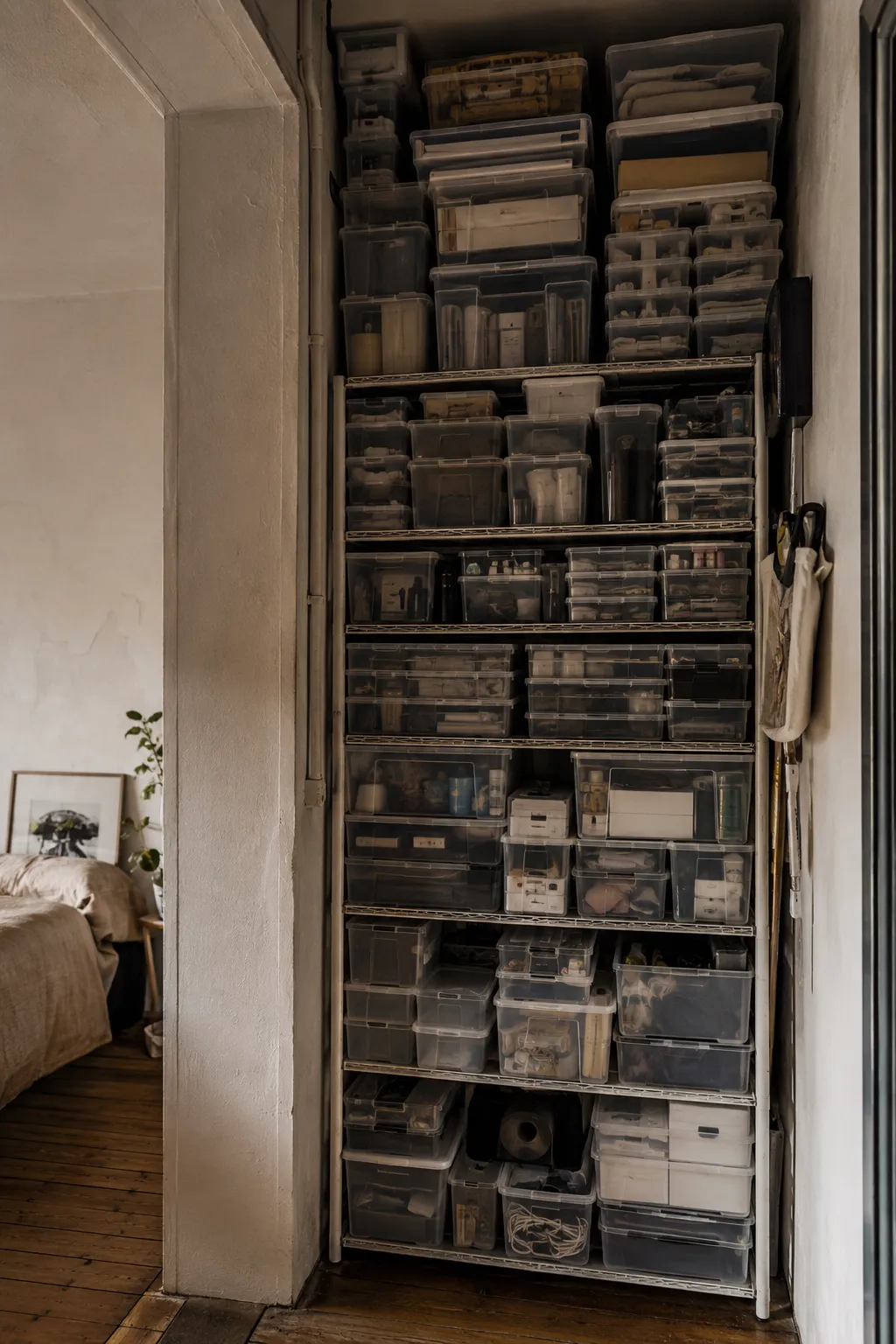
Standing in the middle of a tiny apartment surrounded by matching plastic bins, perfectly aligned labels, and complex drawer dividers should feel calming. Instead, it often feels incredibly exhausting. When the walls are closing in, the standard advice is almost always the same: buy more storage containers, build more shelves, and categorize every single item.
But we know that attempting to solve spatial limitations with relentless categorization only creates a new, invisible problem. In reality, the constant pressure of over organizing small spaces creates a hidden paradox. It directly introduces toxic organization in tiny apartments, transforming your sanctuary into a high-maintenance storage facility.
Understanding why over-organizing makes small spaces feel worse comes down to how the human brain processes environment and effort. Turning a living space into a meticulously managed warehouse does not eliminate stress; it simply validates your exhaustion by rebranding it as an unpaid, daily inventory job.
The Psychology of Organizing Burnout
The failure of a complex organizational system is rarely a lack of willpower. According to behavioral and spatial analyses, true decluttering is actually decision-making in disguise. When we bypass this crucial decision stage and jump straight into over-organizing small spaces, every single bin, nested box, and partition forces the brain to make ongoing micro-decisions. Does this specific cord belong in the ‘work electronics’ bin or the ‘daily use’ drawer?
When the background cognitive load of an overloaded environment becomes too high, any attempt to manage it quickly triggers severe decision fatigue. The mind works constantly in the background to maintain these rigid systems, and over time, this processing becomes exhausting. The frustration is not laziness—it is a direct neurological response to an overloaded environment.
The Misuse of the “Container Concept”
Instead of accepting the natural physical limits of a small apartment, hyper-organization tries to bypass them using endless sorting tools. A drawer or a shelf should inherently act as a physical boundary; when it is full, capacity is reached. Relying on supplemental boxes and nested dividers to hold onto excess belongings ironically crowds the physical and visual volume of the room. It shifts the daily focus from enjoying a calm home to constantly managing a high-density storage facility.
The “Aesthetic Restock” Illusion: Why Social Media Organization Fails in Real Life
Over the past few years, social platforms have romanticized extreme decanting—transferring everyday items like cereal, cotton swabs, and laundry detergent into matching, custom-labeled jars. While visually satisfying on a screen, this curated perfection often explains why social media home organization is unrealistic for daily living and directly fuels aesthetic organization fatigue.
Certified psychologists note that consuming highly curated, 15-second videos of hyper-organized pantries triggers a form of “cleaning dysmorphia”—an intense preoccupation with the perceived imperfection of one’s home. This psychological phenomenon, driven by constant “upward comparison” on social media, blurs the line between functional tidiness and performative perfection. It creates a pervasive sense that a real, lived-in space is “failing” simply because it does not look like a polished stage set. Instead of providing peace, maintaining this meticulous “mini-mart” aesthetic creates immense, invisible pressure for renters in small spaces.
The Mental Cost of “Micro-Categorizing” Your Life
The core issue lies in the shift from basic organizing to micro-categorizing. When belongings are broken down into hyper-specific sub-groups—such as separating charging cables by voltage or storing makeup in highly customized acrylic grids—it heavily depletes limited daily willpower and accelerates decluttering burnout.
The brain naturally craves cognitive ease. A detailed scientific breakdown of choice overload and cognitive load demonstrates that simplifying external choices directly prevents mental exhaustion and preserves our limited working memory. Micro-categorizing does the exact opposite; it demands active “inventory maintenance,” transforming the home from a sanctuary into an unpaid clerical job.
True functional living in a tiny apartment requires systems that drastically reduce daily effort. Reducing clutter is not about micro-compartmentalizing every single object, but rather about establishing intuitive, low-friction systems designed to prevent decision fatigue. Without this shift toward streamlined simplicity, the constant demand for precision leaves renters feeling exhausted by the very organizational systems that were supposed to help them.
4 Signs You Are Suffering from “Organization Burnout”
Identifying the root cause of spatial anxiety often starts with evaluating daily interactions with your living space. Spotting the subtle signs you are over organizing your house—even when managing the tightest layout—helps determine whether current systems are serving you or acting as the primary source of organization burnout.
Sign 1: Your Storage Requires “Too Many Steps” (High-Friction)
The most frequent point of failure in small-space organization is the friction problem. If putting away a simple, everyday object requires more than two physical actions—such as opening a cabinet door, pulling out a nested container, unlatching a lid, and carefully wrapping a wire—the human brain will naturally choose the path of least resistance: leaving it on the counter.
Functional systems must bend to natural human habits, not the other way around. When storage demands excessive physical and mental steps, the result is an immediate breakdown in daily maintenance.
To identify the hidden routines that are quietly draining your daily mental energy, read our comprehensive spatial guide: The "Low-Friction" Apartment: 7 Innocent Habits That Create Mental Noise in Small Spaces Discover how restructuring your layout around the path of least resistance systematically eliminates cognitive fatigue and visual chaos.
Sign 2: You Have More “Empty Bins” Than Actual Belongings
The “buying-as-organizing” trap occurs when the act of purchasing storage containers is mistaken for actual decluttering. Many renters buy organizational tools to solve a spatial problem, which ironically introduces more physical clutter into a tiny layout.
In small apartments, empty bins quickly become a liability rather than a solution. They occupy precious physical volume, restrict spatial flow, and subtly pressure the resident to fill them with unnecessary items. Relying heavily on these containers often perpetuates clutter rather than resolving it—allowing excess belongings to “hide” and turning empty bins into physical clutter in a cramped space.
Sign 3: The “Acrylic Trap” and Visible Anxiety
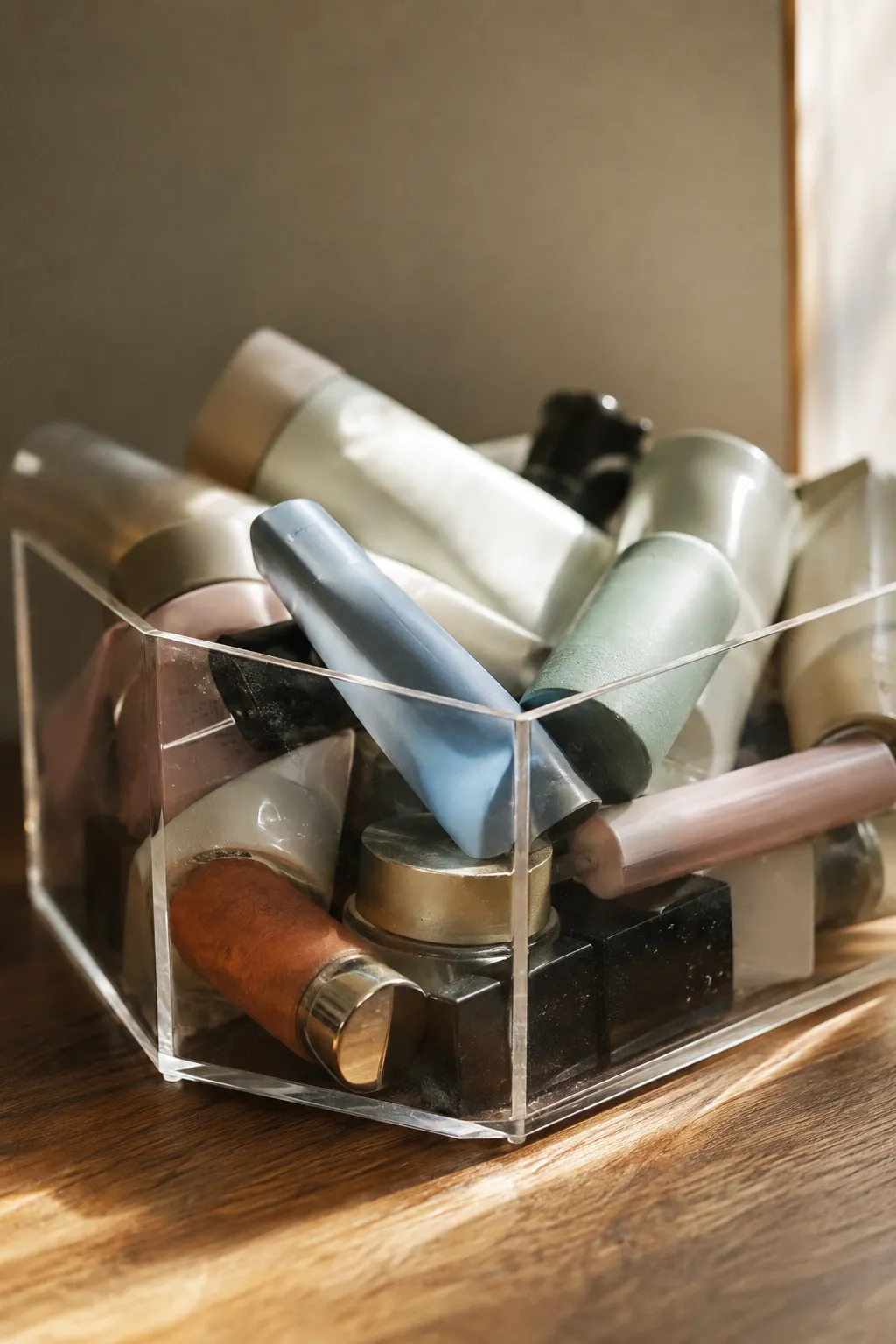
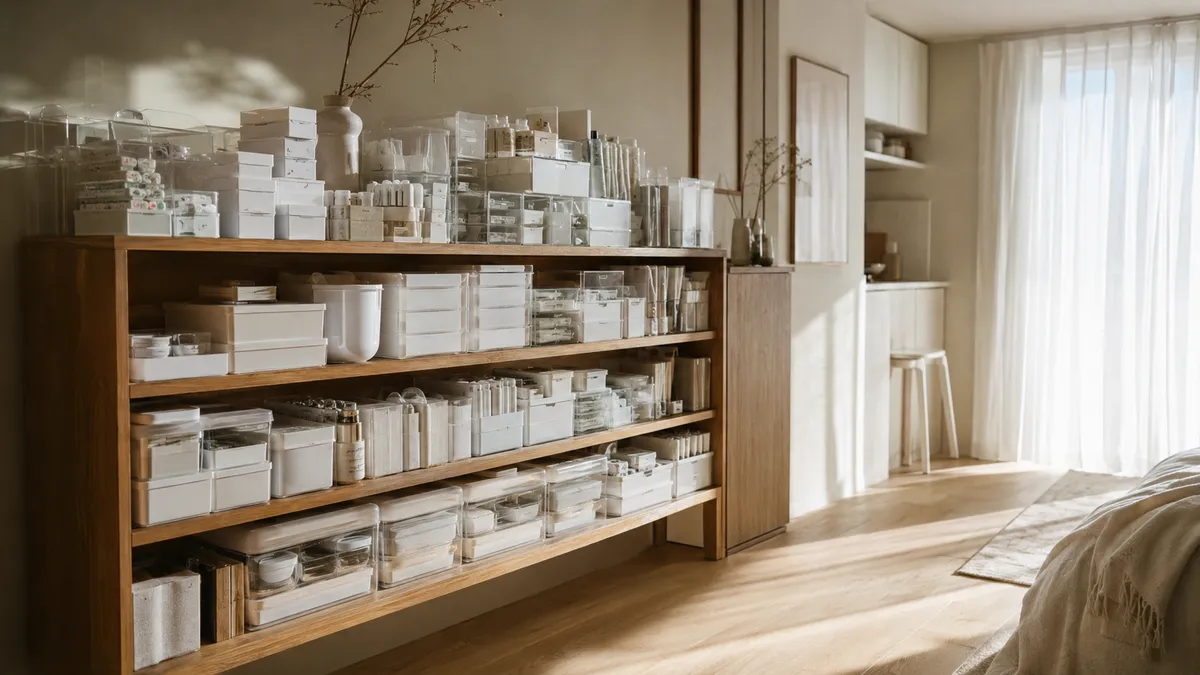
While clear acrylic is frequently marketed as a seamless way to make physical items “disappear,” it often acts as a permanent visual amplifier of chaos in tight quarters. Looking at a transparent bin filled with a mismatched, multi-colored collection of cosmetic tubes or pantry packages creates a high-contrast sensory mosaic.
In a studio apartment, putting everyday messes on full display forces the brain to constantly process fragmented shapes and colors, making the space feel busier and more high-maintenance to keep visually pleasing. Rather than organizing a room, this “acrylic trap” turns functional objects into continuous visual noise. When renters rely on hyper-exposed clear storage, they prevent the brain from utilizing automatic grouping mechanisms, triggering intense neural competition in the visual cortex that constantly drains cognitive bandwidth.
To reverse this sensory overload and reclaim your cognitive energy, you need to establish a protective boundary: The "Visual Silence" Rule: Why Your Tiny Apartment Feels Mentally Exhausting Dive into our foundational guide to discover how opaque storage blocks background noise—and try our simple, 15-minute calm reset routine to restore immediate peace.
Sign 4: Your Space Feels “Sterile,” Not “Snug”
One of the most revealing indicators of this imbalance is the complete loss of a space’s “lived-in” soul. When every sentimental item, book, or woven blanket is locked away in clinical white or clear plastic containers, the apartment slowly begins to mimic a commercial medical clinic.
A functional living area must remain emotionally comforting and physically inviting. Stripping away all organic imperfection scrubs a home of its inherent warmth. Maintaining a cozy aesthetic requires texture, layered warmth, and the acceptance of items existing naturally within the environment.
Over-optimizing an apartment replaces the feeling of being snug with an atmosphere that feels sterile and restrictive. This forced perfection is a prime example of the small apartment habits that create mental noise, shifting the environment from a personal retreat into an ongoing compliance test.
”Warm Minimalism”: The Antidote to Toxic Organization
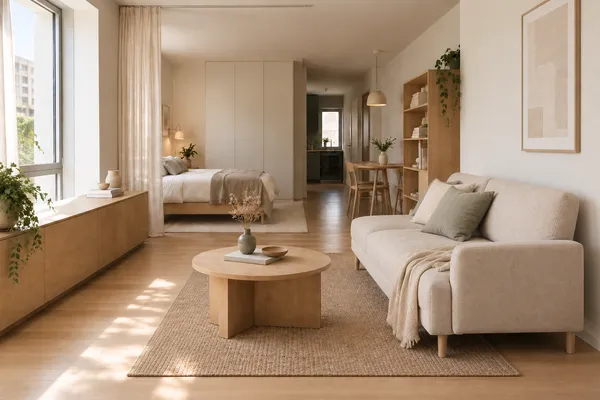
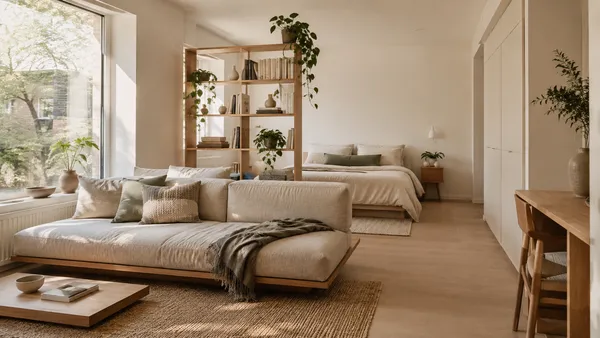
Moving away from rigid, hospital-like categorization requires a shift toward a more flexible, emotionally forgiving approach to belongings. Adopting warm minimalism for real people in everyday life serves as a direct antidote to toxic systems, prioritizing comfort over clinical perfection. It focuses on intentional living in small spaces, ensuring that the home supports daily habits rather than demanding constant administrative upkeep.
Embracing “Macro-Sorting” Over Perfect Precision
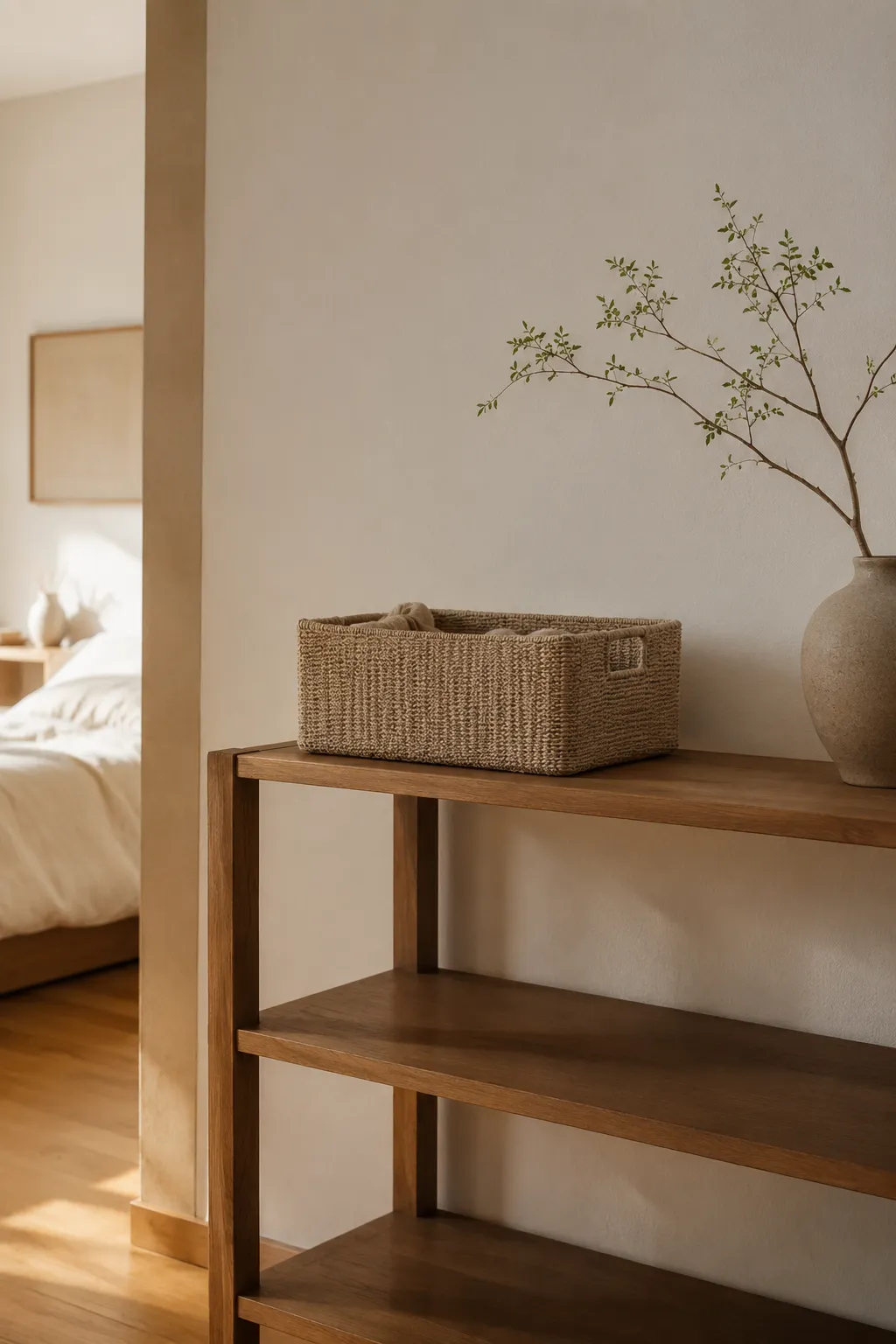
Instead of micro-sorting items into five different mini-dividers—which creates high friction—warm minimalism encourages the practice of “Macro-Sorting”. This approach means designating one beautiful, opaque woven basket or ceramic bowl for a broad category, such as “all electronics” or “all daily skincare”. This method effectively conceals visual noise, keeps essential things accessible in a single physical step, and vastly reduces daily cognitive fatigue.
Behavioral analyses indicate that renters often fail at organizing because they are forced into detailed micro-systems. Embracing macro-organization with simple, open-access opaque bins relieves anxiety for renters who struggle with traditional clinical organization, as outlined in The Clutter Connection. For renters questioning how to embrace warm minimalism in a studio apartment, switching from perfect precision to broad macro-sorting is often the most impactful first step.
Protecting Your “Calm Corners” from Storage Creep
A common pitfall in small-space design is the “optimization obsession”. There is a persistent misconception that every negative cubic inch of a tiny apartment should be converted into storage. However, attempting to fit under-bed boxes, corner shelves, and hanging racks everywhere actively crowds the apartment’s breathing room.
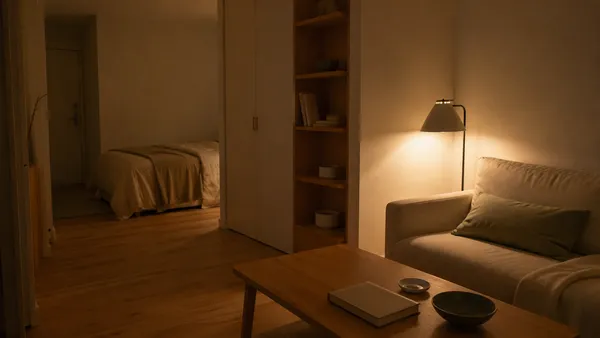
Maintaining completely un-optimized, empty areas is essential for nervous system decompression. Emotional zones must remain completely exempt from the organization obsession to provide genuine mental relief.
Instead of sacrificing every square inch of your layout to storage, you can actively combat spatial claustrophobia by exploring The "Calm Corners" Method: How to Make a Studio Apartment Feel Emotionally Bigger , which offers a practical guide to reclaiming 30% negative space and using emotional zoning for immediate sensory relief.
The “Good Enough” Reset: Shifting from Perfect to Peaceful
Achieving mental relief in small spaces rarely comes from maintaining a perfectly labeled, magazine-ready aesthetic. Instead, it stems from establishing a tiny home friction reduction system—a practical setup that accepts good enough as the ultimate standard. A truly functional and warm environment is significantly more sustainable than one requiring constant, meticulous categorization.
Defining Your Personal “Clutter Threshold”
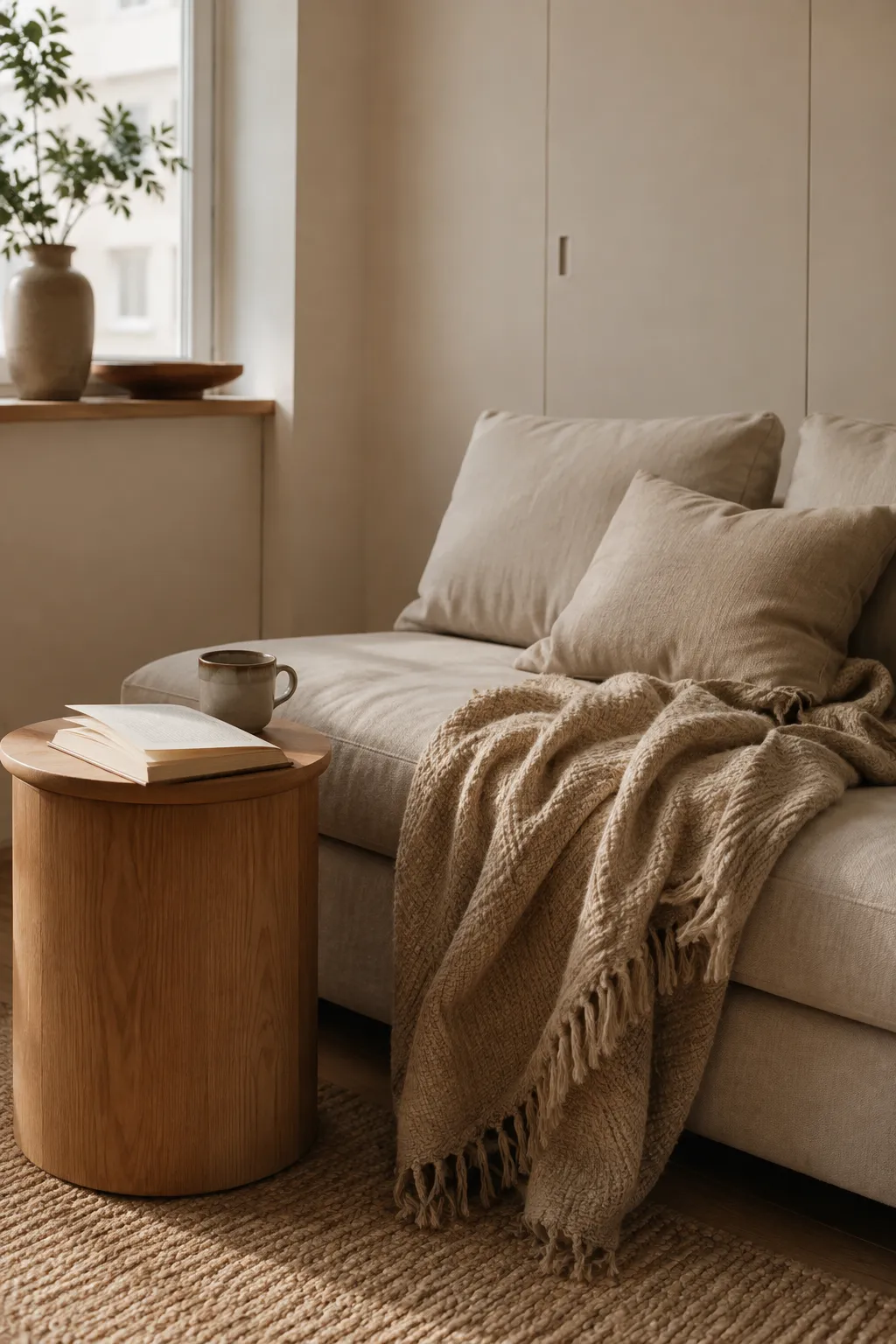
The concept of a “Clutter Threshold,” pioneered by organizing expert Dana K. White, provides a highly practical framework for managing belongings without stress. This threshold represents the exact volume of physical stuff a renter can comfortably manage and keep under control without feeling anxious or spending an entire weekend cleaning.
This capacity is strictly personal. While one renter might comfortably maintain a larger volume of belongings, another busy renter in a compact studio might naturally possess a much lower threshold. Deconstructing this threshold proves that resolving spatial anxiety involves adapting belongings to personal limits and the physical container concept, rather than inventing complex systems to store excess items.
For renters exploring how to find your clutter threshold in a small space, practical warning signs often indicate when a room is existing above its natural capacity. For instance, daily resetting routines surpassing the 15-minute reset threshold serve as a clear signal that the room’s inventory is too high. Identifying and respecting this exact sweet spot is the true key to shifting a tiny apartment from artificially perfect to genuinely peaceful.
Sources & References
- Why Decluttering Feels So Hard (And It’s Not Because You’re Lazy) — Arlene | Bona Fide Organizing
- The Real Reason Home Organization Feels So Overwhelming — Dédé Wilson | FODMAP Everyday
- Are You Susceptible to ‘Cleaning Dysmorphia’? This Aesthetic Hurdle Could Be Adding Hours to Your To-Do List — Chiana Dickson | Homes & Gardens
- Why do we make worse decisions at the end of the day? The Decision Fatigue, explained. — Dr. Lauren Braithwaite | The Decision Lab
- How to overcome decision fatigue – decluttering tricks to make everyday life less exhausting — Chiana Dickson | Homes & Gardens
- 3 Reasons Why Storage Bins Do Not Make You More Organized — Amy Slenker-Smith | Simply Enough
- Interactions of Top-Down and Bottom-Up Mechanisms in Human Visual Cortex — Stephanie McMains & Sabine Kastner | Journal of Neuroscience
- The Clutter Connection: Discover Your Unique Organizing Style for Lasting Clutter-Free Living — Cassandra Aarssen | Bookey Summary
- How Knowing Your Clutter Threshold Can Help When You’re Overwhelmed with Too Much Stuff! — Simple Lionheart Life
- Clutter Threshold: How Much Clutter Can You Manage? — Balance Through Simplicity